Since 2008
Based in Belgium and France
+ 60 000 clients
Our blog
A.S.S.
Shopping Cart
Découvrez comment installer, configurer et utiliser WatchPower pour surveiller votre onduleur solaire en temps réel....
Practical guide to reconnect your SMA Sunny Boy inverter to the WiFi network after a change of modem, router or...
Find out how Aiko is revolutionising photovoltaics with its silver-free ABC cells, laser engraving and 0BB...
Ajouter des batteries LiFePO4 neuves à un parc existant exige un équilibrage préalable rigoureux. Découvrez pourquoi...
Find out how the Walloon incentive tariff 2026 and dynamic contracts radically transform the electricity bill of...
Crystalline silicon solar panels are currently the most widespread technology in the world. However, a phenomenon largely unknown to the general public can significantly reduce their performance: PID (Potential Induced Degradation) . The good news is that SMA has developed a reliable and accessible solution: the SMA PID Box , also known as the PV Offset Box.
Potential Induced Degradation (PID) is a form of degradation that affects crystalline silicon photovoltaic cells (monocrystalline and polycrystalline). This phenomenon occurs when solar modules are subjected to a negative electrical potential relative to ground .
Under these conditions, electrons gradually migrate from the photovoltaic cells to the metal frame of the panel. This migration creates an internal polarization that progressively reduces the power produced by the installation.
"Without protection against PID, the loss of efficiency can reach up to 30% in just a few years, with a direct and measurable impact on the profitability of a solar installation." — Fraunhofer ISE, Solar Energy Research Institute
Several conditions favor the appearance and acceleration of the PID phenomenon:
PID is not a theoretical problem. Many manufacturers and installations have been affected:
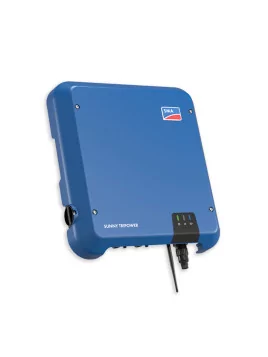
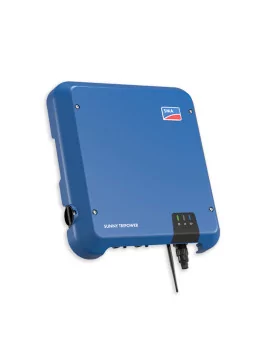
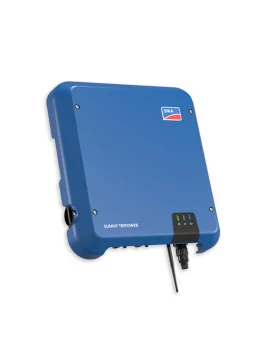
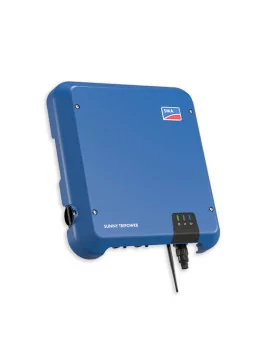
Discover our SMA inverters
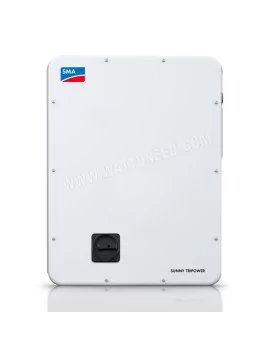
The PID Box SMA , also known as the PV Offset Box , uses an intelligent nighttime regeneration principle to counteract and reverse the effects of PID.
The system operates primarily at night, when the photovoltaic installation is inactive:
"The SMA PID Box restores panel performance approximately twice as fast as the initial rate of degradation. It's a simultaneous preventative and curative solution." — SMA Solar Technology Technical Documentation
Faced with the problem of PID, several solutions exist on the market. Here is a detailed comparison to help you choose:
Discover our certified solar panels
The ROI (return on investment) analysis of the PID Box SMA demonstrates its economic relevance, particularly in Belgium and France where residential solar kits represent a significant investment.
Let's take a concrete example of a typical residential installation in Belgium:
Economic conclusion: With an ROI of less than 3.5 years and a cumulative gain of more than €5,000 over the lifetime of the installation, the SMA PID Box offers an excellent cost-benefit ratio, far superior to the complete replacement of modules or the installation of a transformer inverter.
The SMA PID Box can be installed on:
Configure your complete solar kit
P-type crystalline silicon photovoltaic panels (monocrystalline and polycrystalline) are the most susceptible to PID. This technology represents approximately 90% of the global market. Recent modules certified "PID-resistant" or "PID-free" are specifically designed to resist this phenomenon. Thin-film technologies such as CdTe or CIGS are generally less affected.
No, the PID Box's energy consumption is less than 3 W during its nighttime operation (approximately 8-10 hours per night). This represents an annual consumption of around 10 kWh, or less than €3 per year. This cost is completely negligible compared to the gains achieved in terms of restoring photovoltaic efficiency.
Yes, absolutely! The SMA PID Box can be easily added to existing photovoltaic systems, whether they are a few months or several years old. Installation simply requires an electrical connection to the PV array and a 230V grid connection. It is recommended to obtain approval from the panel and inverter manufacturers before installation, although compatibility is generally excellent with modern inverters.
Yes, several alternatives exist, but with different trade-offs. The main solutions are: using transformer-based inverters with grounding (effective prevention but lower efficiency and high cost), replacing modules with PID-resistant certified panels (a radical but very expensive solution), or initially choosing PID-free modules for new installations. The SMA PID Box offers the best compromise between cost, efficiency, and simplicity, particularly for existing installations.
Several indicators can reveal a PID problem: a gradual decrease in yield not explained by soiling or shading, a production decrease exceeding normal degradation (0.5-0.7% per year), production discrepancies between strings (panel chains), or modules exhibiting visible dark areas (visual inspection or thermography). A professional diagnosis with IV curve measurements can confirm PID.
No, the SMA PID Box operates completely autonomously and requires no special maintenance. Once installed and configured, it operates automatically every night without human intervention. It is simply recommended to check annually during general system maintenance that the operating indicator is active and that power consumption remains stable.
Conclusion: The SMA PID Box, essential protection for your photovoltaic investment
Potential Induced Degradation (PID) represents a real and underestimated threat to crystalline silicon photovoltaic installations. With yield losses reaching up to 30% in just a few years, this phenomenon can seriously compromise the profitability of a solar investment.
The SMA PID Box offers an elegant solution to this problem: efficient, economical, and easy to implement. With a return on investment (ROI) of less than 4 years and potential savings of several thousand euros over the installation's lifetime, it represents a sound investment for both residential and commercial properties.
Whether you are planning a new installation or want to protect an existing system, Wattuneed will assist you in choosing and integrating the SMA PID Box that is suitable for your configuration.
Wattuneed SPRLRue du Commerce 102, 1040 Brussels, BelgiumTelephone: +32 87 45 00 34Email: info@wattuneed.comwww.wattuneed.comYour partner in photovoltaic and renewable energy solutions
check_circle
This store asks you to accept cookies for performance, social media and advertising purposes. Social media and advertising cookies of third parties are used to offer you social media functionalities and personalized ads. Do you accept these cookies and the processing of personal data involved?