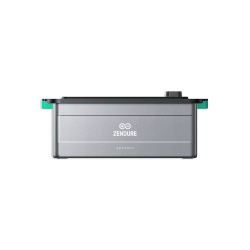
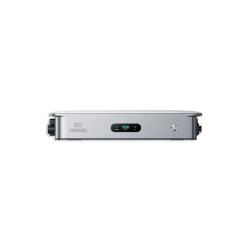
Marstek Venus-E-GEN-3.0 lithium battery - 51.2...
Price
€1,300.99
Regular price
€1,427.99
- On sale!
- -€127.00
Voltage
Technology
Brand
Price
Plug & Play solar batteries are the simplest solution to store your solar energy without complex installation. Designed for quick commissioning — often without an electrician — they increase your self-consumption rate and reduce your grid dependency. Available from Marstek, Zendure and Anker, they pair with an existing Plug & Play kit or any solar installation via AC coupling. Scalable by adding extra modules depending on the model.


A Plug & Play solar battery is designed to store your solar energy and automatically return it in the evening or during consumption peaks — without modifying your electrical panel, without complex wiring, often without an electrician. It's the ideal entry point into solar storage for those who already have a Plug & Play kit or a small solar installation and want to take the next step.
These batteries use AC coupling: they connect to your home's electrical network (via a dedicated socket or distribution board) and use a smart meter (CT clamp or P1 module) to detect your solar production and consumption in real time. When production exceeds consumption, the battery charges. When consumption exceeds production (evenings, nights), the battery discharges to cover your needs before you draw from the grid. Everything is managed from a smartphone app.
Estimate what you consume in the evening and overnight, between the end of solar production and the next morning. For a flat or small house: 1 to 3 kWh often covers the essentials. For a larger home: 5 to 10 kWh covers most overnight needs. Our storage ROI calculator helps you choose the right capacity.
Some batteries are modular: start with a base capacity and add modules later without changing the management system. This is the case for Marstek and Zendure ranges. Others are single-unit with fixed capacity — cheaper to buy but not expandable.
Most Plug & Play batteries require a consumption measurement sensor (CT clamp on the distribution board or P1 module on the smart meter) to optimise charge and discharge in real time. Some models include it in the box, others offer it as an optional accessory — check what's included before ordering.
One of the most popular brands in the segment in Europe. The Marstek B2500 and Venus stand out for their all-in-one design, intuitive app and compatibility with the main Plug & Play kits on the market. The range is modular — you can combine multiple units to increase capacity.
The Plug & Play storage benchmark with the SolarFlow ecosystem. The SolarFlow hub pairs with AB1000/AB2000 additional batteries for capacity up to 7.68 kWh in standard configuration. Compatible with most Plug & Play panels via DC inputs.
Renowned for build quality and after-sales service. Anker SOLIX solutions are positioned in the premium Plug & Play storage segment, with a highly polished management app and deep integration with portable and fixed solar panels.
check_circle
check_circle