Since 2008
Based in Belgium and France
+ 60 000 clients
Our blog
A.S.S.
Shopping Cart
Les panneaux photovoltaïques produisent en hiver grâce à la lumière, pas à la chaleur. Le froid améliore le...
Find out more about energy sharing and renewable energy communities in Belgium: the 2025 legal framework, economic...
Découvrez comment équiper votre tiny house en totale autonomie avec le kit photovoltaïque Victron : modulaire,...
Découvrez comment le peak shaving avec onduleur hybride et batteries lithium évite les coupures de compteur en...
Transformez votre balcon en mini-centrale solaire avec les kits plug and play Wattuneed. Installation simple, budget...
Do you own a hybrid inverter like the SOFAR ESI with backup/EPS function? Excellent choice to guarantee your energy independence! But have you considered the earthing system configuration and continuous insulation monitoring in standby mode?
These technical aspects are crucial for compliance with NF C 15-100 standards , validation by Consuel (the French electrical safety certification body), and above all, the safety of personnel during backup operation. In this comprehensive guide, we will demystify these concepts and explain how to correctly configure your photovoltaic system with storage for safe and compliant operation.
"A photovoltaic installation with a backup mode that is incorrectly configured in terms of the neutral system can present serious electrical risks and be rejected by the Consuel (French electrical safety certification body). Understanding IT, TT, and TN-S systems is essential for any hybrid installation."
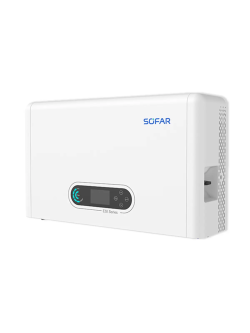
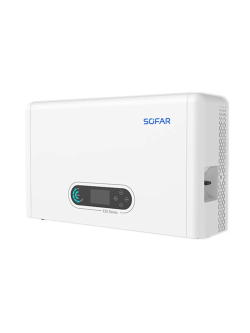
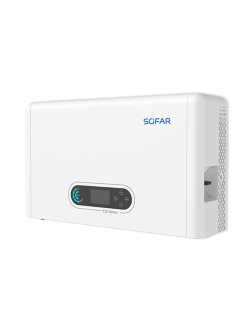
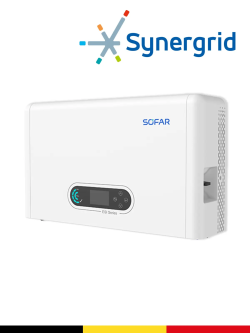
💡 Product concerned: Sofar Solar ESI 3-6 kVA hybrid inverter
Transformerless hybrid UPS with integrated EPS (Emergency Power Supply) output
Autonomous mode , also called backup mode or EPS (Emergency Power Supply), is a function that allows your hybrid inverter to continue to power certain electrical circuits even during a power outage.
Hybrid inverters like the SOFAR ESI 3K-S1 to 6K-S1 incorporate this backup function which ensures:
During a network outage, your inverter immediately detects the absence of voltage and automatically switches to its backup output to power your priority equipment (refrigerator, lighting, alarm system, internet box...).
Complete solution with ESI 3 kVA inverter and BTS 5K battery
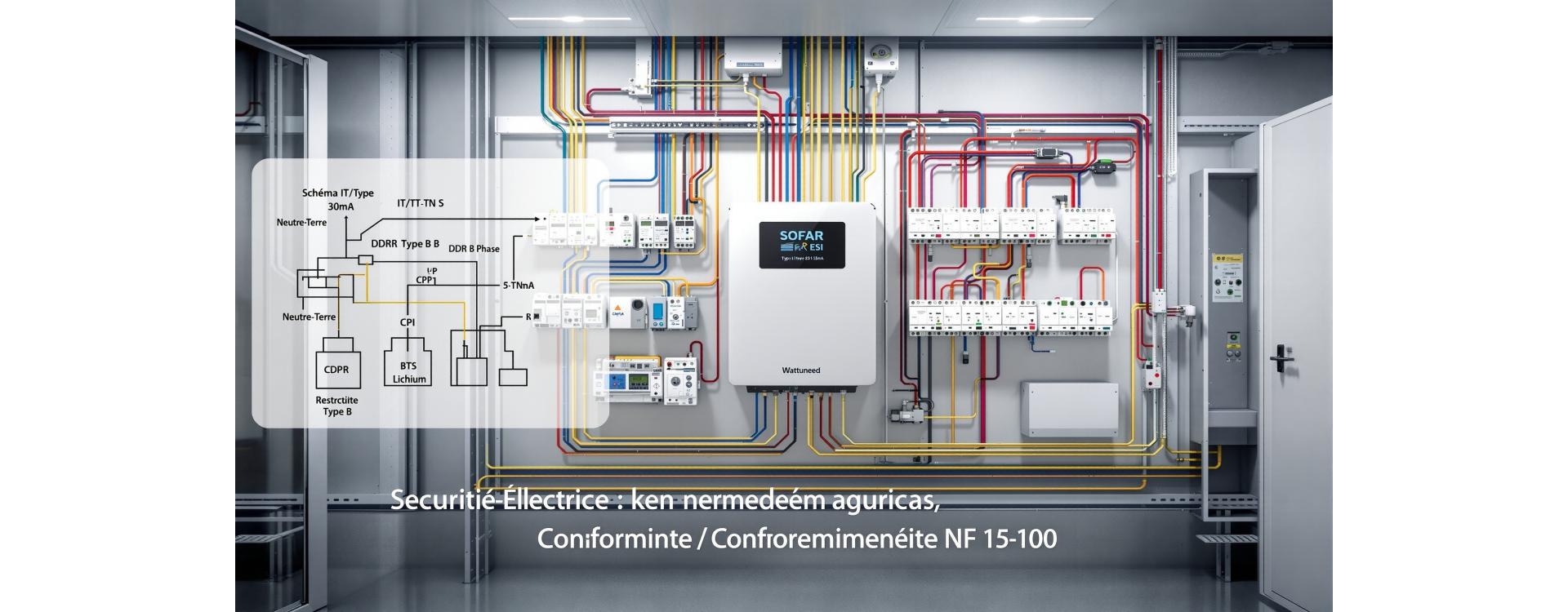
In stand-alone mode, your electrical installation is no longer connected to the public grid but forms an isolated electrical network . It is therefore crucial to define the earthing system (ES) applicable to your emergency exit. Three main systems exist:
Hybrid inverters like the SOFAR ESI are transformerless (without a galvanic isolation transformer). Therefore, in backup mode, the AC output initially operates in a network isolated from earth – which corresponds to an IT scheme .
In this system:
This IT configuration without CPI is not compliant with the requirements of NF C 15-100 and will be rejected by Consuel.
To ensure safety and compliance, it is strongly recommended to connect the neutral of the emergency exit to local earth. This configuration transforms the IT system into a TT or local TN-S system .
How do we create this neutral-to-earth connection?
Two methods are possible:
Advantages of the TT/TN-S system in backup mode:
"According to French regulations, if the installation is normally in a TT system with the public grid, switching to standalone mode must guarantee a consistent and safe SLT. Grounding the AC side neutral is therefore essential for transformerless inverters."
Permanent Insulation Monitoring (CPI) is an electrical monitoring device that continuously measures the insulation resistance between live conductors (phase and neutral) and earth in an electrical network.
Its main role is to detect the first insulation fault in an IT network scheme, before a second fault occurs and creates a danger to people.
How the CPI works:
SOFAR ESI hybrid inverters internally integrate certain monitoring functions compliant with IEC 62109 standards:
⚠️ IMPORTANT : These internal devices primarily monitor the continuous side (PV/Battery) . They do not replace a dedicated CPI on the AC side if the backup output operates in an IT configuration.
The NF C 15-100 standard (sections 411.6 and 537) requires permanent insulation monitoring in accordance with the NF EN 61557-8 standard for any installation operating in an IT system.
If you follow the recommendations and connect the neutral wire of the emergency exit to earth (via the Neutral Point Grounding function or an external contactor), then:
Differential protection required:
In a TT/TN-S system, each circuit supplied by the emergency output must be protected by a residual current device (RCD) :
✅ Type B RCD at the head of the emergency distribution board • ✅ 30 mA sensitivity • ✅ Protection against DC components
Leaving the emergency exit in an IT (floating neutral) configuration without an external fire alarm exposes the system to major hazards.
The Consuel certificate form for photovoltaic installations with batteries clearly states:
"If no galvanic isolation is present (transformerless inverter), a TT system should be implemented by grounding the neutral on the AC side."
This requirement aims to:
🔗 Guide to French legislation
To ensure the compliance of your installation with a hybrid inverter in standalone mode, two approaches are validated by standards and Consuel:
Our Wattuneed recommendation:
For 95% of residential and commercial installations in France and Belgium, Solution 1 (neutral connected to earth) is the most suitable. It combines simplicity, compliance, and controlled cost while guaranteeing an optimal level of safety.
Before making any changes, check the current configuration of your SOFAR ESI inverter:
Recommended method - NPG activation in the inverter:
⚠️ WARNING : This operation must be carried out by a qualified electrician . Modifying the neutral wiring affects the electrical safety of the installation.
Ensure that the protective earth (PE) conductors of the emergency exit and the main network are connected together at the earth bar of the electrical panel. This connection is essential to guarantee a common earth reference in off-grid mode.
Install or check for the presence of suitable residual current devices on the circuits supplied by the backup output:
Access our sizing tools and technical guides
Once the configuration is complete, perform the following tests:
An IT system is a neutral grounding system where no live conductor is connected to earth (floating neutral). In emergency mode, this configuration is risky because a first insulation fault does not trigger any protection and goes undetected without a fire alarm control panel (FACP). A second fault can then create a life-threatening hazard.
SOFAR ESI inverters incorporate an RCMU (Residual Current Monitoring Unit) to detect insulation faults on the DC side (PV/Battery), but not a complete CPI compliant with NF EN 61557-8 for the AC side. If you leave the neutral wire floating (IT system), an external CPI is mandatory.
Access the Advanced Settings menu via the LCD screen or the SofarSolar app, locate the "Neutral Point Grounding (NPG)" setting, and switch it to "Enabled". This operation must be performed by a qualified electrician.
Install a 30 mA Type B RCD at the head of the emergency distribution board. The Type B detects faults with a DC component, which is essential with photovoltaic inverters. You can then install 30 mA Type A RCDs per circuit if a Type B is present upstream.
Yes, for transformerless inverters (without galvanic isolation) like the SOFAR ESI, the Consuel (French electrical safety certification body) requires either neutral grounding in backup mode OR the presence of a compliant external CPI (presumably a specific type of protection device). Without one of these two solutions, the installation will be deemed non-compliant with NF C 15-100.
No, installing a CPI (Controlled Protection Interface) and modifying the neutral wiring system are operations reserved for qualified electricians . Incorrect configuration can create serious electrical hazards and invalidate your home insurance.
The configuration of the neutral system and the insulation control in standalone mode is not a secondary technical detail: it is a fundamental safety element that conditions the conformity of your photovoltaic installation with storage.
Key points to remember:
The Wattuneed team is available to assist you with the configuration and compliance of your installation. Please feel free to consult our technical guides or contact our support team with any questions.
💡 Need help? Contact our Wattuneed technical support
Our team of experts will assist you in configuring your hybrid inverter.
About Wattuneed SPRLWattuneed, the Belgian leader in photovoltaic and battery storage solutions, has been supporting individuals and professionals in their energy transition for over 10 years. We offer technical expertise, responsive customer service, and a complete range of Sofar Solar inverters, BTS batteries, solar panels, and accessories for self-consumption and energy independence in Belgium and France.
check_circle
This store asks you to accept cookies for performance, social media and advertising purposes. Social media and advertising cookies of third parties are used to offer you social media functionalities and personalized ads. Do you accept these cookies and the processing of personal data involved?