Since 2008
Based in Belgium and France
+ 60 000 clients
Our blog
A.S.S.
Shopping Cart
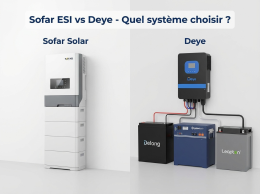
Detailed comparison between the integrated Sofar ESI ecosystem (inverter + BTS battery) and the maximum flexibility...
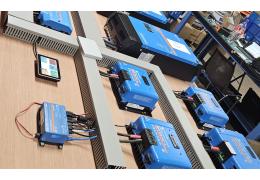
Découvrez le système triphasé 15 kVA Wattuneed : 29 panneaux AIKO ABC 460W, 3 onduleurs Victron MultiPlus-II, 30 kWh...
The solar battery industry is undergoing a major technological revolution: active thermal management, sodium-ion,...
Are you considering equipping your motorhome, boat, tiny house or home with a photovoltaic system? The first question...
Discover how to configure Deye Copilot step by step to maximise your energy savings. Comprehensive guide with...
Inverter shutdown is one of the major challenges facing photovoltaic installations in Belgium and France. This phenomenon occurs when your inverter automatically switches to safety mode and temporarily stops converting solar energy into electricity. The consequences are immediate: loss of production, financial loss and frustration for solar installation owners.
In Wallonia, this problem now affects more than 10,000 low-voltage areas, with a dramatic increase since 2023. The number of photovoltaic installations has risen from 110,000 to more than 200,000 units in just two years, saturating local electricity grids during peak solar production.
"The outages mainly occur between 11 a.m. and 3 p.m. on sunny days, when solar production is at its highest and the grid voltage exceeds regulatory safety thresholds."
The main cause of disconnections is overvoltage in the low-voltage grid. When many photovoltaic installations simultaneously feed their production into the same neighbourhood transformer, the local voltage rises above European standards (230V +10% = 253V maximum).
Your inverter detects this anomaly and automatically disconnects to protect your installation and the grid. Although this safety mechanism is protective, it generates production losses of up to 15% to 30% of your annual yield in heavily affected areas.
Network operators (ORES, RESA, AIEG in Belgium) are actively working to strengthen infrastructure. However, upgrading transformers and cables takes time: ORES plans to address 1,250 problem areas by 2025, but more than 8,000 areas remain affected.
The most effective solution is to consume the electricity you generate directly rather than feeding it into the grid. The higher your self-consumption, the less energy you feed into the local grid, thereby reducing the risk of power surges and outages.
A standard self-consumption rate without a battery ranges from 30% to 40%. With a properly sized solar battery, you can achieve 70% to 85% self-consumption, virtually eliminating outages while maximising your savings.
💡 Recommended product: Hybrid Solar Inverters
Intelligent self-consumption management with integrated storage
Programming your energy-intensive appliances (washing machine, dishwasher, water heater, charging station) to operate during solar production hours (10 a.m. to 4 p.m.) allows you to naturally absorb your production and reduce grid injection.
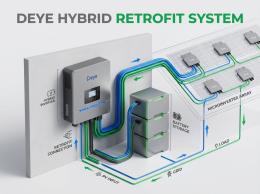
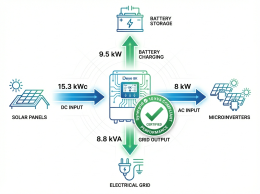
A hybrid inverter represents a major advance in photovoltaic technology to counteract dropouts. Unlike a standard inverter, which can only convert and feed solar energy into the grid, the hybrid inverter intelligently manages three simultaneous energy flows:
This multi-flow architecture allows the hybrid inverter to automatically prioritise the storage of your surplus production rather than feeding it into the grid, thus eliminating the main cause of grid disconnection.
Complete hybrid inverter + lithium battery pack
At Wattuneed, we offer a carefully selected range of hybrid inverters that meet the most demanding Belgian and European standards. The Deye, Sofar Solar, SolaX and MultiSolar brands offer optimal performance to eliminate outages while maximising your self-consumption.
Deye hybrid inverters stand out for their 12 advanced features, including intelligent multi-flow management, compatibility with high-voltage batteries, and flexible operating modes adapted to dynamic tariffs. 🔗 See Deye features
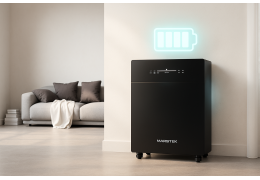
The solar battery connected to your hybrid inverter acts as a smart energy buffer. When your solar production exceeds your instantaneous consumption, instead of feeding it back into the grid and risking a disconnection due to overvoltage, the excess energy is automatically stored in the battery.
This mechanism has three major advantages:
"With a properly sized battery, our customers in areas with frequent outages recover 95% to 98% of their initially lost production, representing an average annual gain of £400 to £700 depending on the size of the installation."
The sizing of your solar battery must meet two objectives: absorb your daily surplus production and cover your night-time needs. For a standard residential installation of 5kWp to 8kWp, a storage capacity of 5kWh to 15kWh offers the best compromise between cost-effectiveness and performance.
To accurately calculate the battery capacity that is right for your situation, use our battery storage cost-effectiveness calculator, a free tool that incorporates your consumption data, estimated production and current energy prices.
Lithium-ion batteries (mainly LFP - Lithium Iron Phosphate) currently dominate the residential storage market thanks to their excellent performance/lifespan ratio. The Pylontech, Sofar Solar and BYD brands offer lithium solutions with 6,000 to 8,000 charge cycles, guaranteeing a lifespan of 10 to 15 years.
✅ Secure LFP technology • ✅ Modular (stackable) • ✅ Compatible with all hybrid inverters
Backup mode (also known as EPS - Emergency Power Supply or UPS function) is an advanced feature of high-quality hybrid inverters. When a power outage occurs, the inverter automatically switches to island mode in less than 20 milliseconds, powering your priority equipment from your solar panels and/or battery.
This continuity of power supply is particularly valuable for:
If your hybrid inverter has a backup function, there are two possible scenarios depending on whether or not you have a battery installed:
For optimal use of backup mode, there are two possible approaches:
1. Partial backup (priority circuits): The electrical installation includes a dedicated distribution board that only supplies essential equipment. This configuration requires the intervention of a qualified electrician to create a separate backup circuit. Advantage: extended autonomy due to reduced consumption.
2. Total backup (entire home): The hybrid inverter powers the entire domestic installation. This solution is simpler to install but requires a higher capacity battery (minimum 15-20 kWh) to ensure sufficient autonomy.
For a family of four with standard consumption, allow for:
Let's take the example of a 6 kWp installation in an area with high take-up (Wallonia, a region with high PV density):
Assumptions: electricity tariff €0.30/kWh, feed-in tariff €0.05/kWh, lifespan 20 years
In Belgium, several financial support mechanisms facilitate investment in a hybrid installation with storage:
Before installing a hybrid inverter with battery to solve your outage problems, check these essential points:
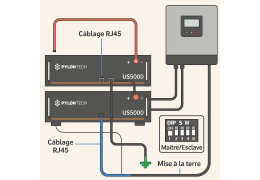
Wattuneed offers detailed commissioning guides for each inverter-battery combination. Our documentation guides you step by step, from wiring to software configuration. Consult our Deye-Pylontech guide for a concrete example of configuration.
The software configuration of your hybrid inverter plays a crucial role in eliminating dropouts. Here are the essential settings to optimise:
Wattuneed has designed all-in-one packs specifically to eliminate outages while maximising your profitability. These turnkey solutions combine professional-grade hybrid inverters with long-life lithium batteries.
💡 Recommended product: Deye 5kW self-consumption kit + 5.12kWh battery
Complete solution with 12 450W bifacial panels to eliminate outages
One of the major advantages of hybrid inverters is their scalability. You can start your photovoltaic project with a hybrid inverter alone, then gradually add battery modules when:
This phased approach allows you to spread the investment while securing your installation for the future.
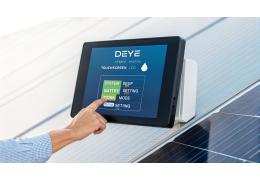
Modern hybrid inverters incorporate advanced monitoring features via smartphone applications (iOS/Android) and web interfaces. You can view the following in real time:
Smart monitoring enables early detection of anomalies and anticipation of maintenance interventions. You receive notifications in the event of:
A hybrid inverter coupled with a correctly sized battery eliminates 95% to 98% of outages by absorbing your surplus production instead of feeding it into the grid. The remaining 2% to 5% corresponds to exceptional situations (100% charged battery + maximum production + zero consumption). This reduces production losses from 15-30% to less than 2%, which is a considerable gain.
For a 6 kWp residential installation, we recommend a battery capacity of 10 to 15 kWh. This range allows you to store most of your daily surplus production while covering your night-time consumption needs. With 10 kWh, you can achieve 70-75% self-consumption; with 15 kWh, you can aim for 80-85%. Use our sizing toolkit for a customised calculation.
Yes, some hybrid inverters offer a backup mode without a battery, but with significant limitations. Battery-free backup only works during daylight hours and the available power fluctuates according to instantaneous solar production. If it becomes cloudy, your equipment may shut down. Battery backup provides a stable power supply 24 hours a day, with autonomy ranging from several hours to several days depending on the installed capacity. For real power security, a battery is essential.
The LFP (Lithium Iron Phosphate) lithium batteries used in our installations have a lifespan of 10 to 15 years, corresponding to 6,000 to 8,000 full charge/discharge cycles. In actual use with partial cycles, this lifespan can even be extended. Manufacturers generally guarantee a residual capacity of 80% after 6,000 cycles. The Pylontech, Sofar Solar and BYD brands that we distribute offer 10-year manufacturer's warranties, a guarantee of quality and reliability.
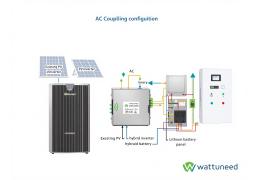
Yes, this is possible, but it depends on your current inverter. If you already have a hybrid inverter, adding a battery is usually simple and only requires connection and configuration. If you have a standard inverter, there are two solutions available to you: either replace the inverter with a hybrid model (the optimal solution), or add an AC-coupled battery inverter in parallel (a solution that retains your existing inverter). Contact our technical support team for an analysis of your specific situation.
In Belgium, distribution system operators (DSOs) such as ORES and RESA have introduced a flat-rate compensation of €48 per kVA of inverter power per year for installations experiencing recurring outages. This compensation is paid after the DSO has officially recorded the outages. However, this compensation only partially offsets the actual production losses. The sustainable solution remains the installation of a battery storage system, which structurally eliminates the problem.
● This video explains how to avoid the prosumer tax in Belgium with a solar battery. Find out how to optimise your self-consumption, reduce your electricity bills and gain energy independence.
Wattuneed SPRL - Your Belgian partner for high-performance, sustainable photovoltaic solutions. Our team of experts will assist you in choosing, installing and monitoring your hybrid system with storage to permanently eliminate outages and maximise your self-consumption. Discover all our photovoltaic guides and consult our technical support for any questions.
check_circle
This store asks you to accept cookies for performance, social media and advertising purposes. Social media and advertising cookies of third parties are used to offer you social media functionalities and personalized ads. Do you accept these cookies and the processing of personal data involved?