Since 2008
Based in Belgium and France
+ 60 000 clients
Our blog
A.S.S.
Shopping Cart
Systèmes all-in-one (Zendure, EcoFlow, Bluetti, Marstek) vs modulaires (Deye, Victron + Pylontech) : comparatif...
Guide complet sur les disjoncteurs électriques : calibre, courbes B/C/D, sections de câbles, dimensionnement AC/DC...
A reversible heat pump with underfloor heating consumes 2,000-5,000 kWh/year: discover why upgrading your...
Master Pylontech log recovery with Battery View and the official DC balancing procedure to optimize your US2000,...
A complete technical guide to connecting a genset to a hybrid inverter: rigoroussizing ,secure cabling ,...
Integrating a genset with a hybrid inverter is the ultimate solution for guaranteeing a 100% reliable power supply, even in the event of a prolonged power cut. This technical guide is aimed at professional installers and informed private individuals who want to master the subtleties of sizing, wiring, frequency stabilisation and preventive maintenance of a hybrid solar installation with genset backup.
Unlike a simple grid connection, interfacing with a genset requires an in-depth understanding of mechanical regulation (engine speed), electrical regulation (AVR/Inverter) and inverter synchronisation protocols. An error in sizing or parameter setting can lead to connection refusals, untimely shutdowns, or even damage to the equipment.
Sizing a genset to supply a hybrid inverter follows a precise formula:
PGenset (kVA) = (Battery Pcharge +Consumer Pbypass) × Ksafety
With :
⚠️ CRITICAL WARNING: The 1.35 factor is NOT an arithmetic product of cos φ (load power factor). It is an empirical operational safety coefficient that covers :
Why 1.35 and not cos φ?
🏠 Case study: Residential installation with priority backup
Detailed calculation:
✅ Recommended generator set: 10-12 kVA diesel 1500 RPM
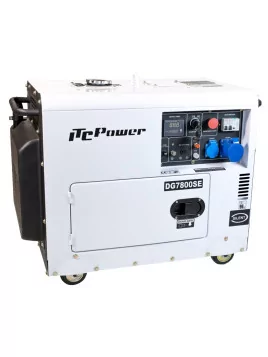
💡 Recommended product: Kompak 6.3kW (8 kVA) diesel generator set
1500 RPM soundproof solution for residential installation 5-8 kVA.
✅ Professional recommendation: For integration with a hybrid inverter and regular use (>10 hours/month), give preference to a 1500 RPM diesel genset. The initial extra cost (×2) is amortised in 2-3 years thanks to its durability and energy efficiency.
⚠️ CAUTION INVERTER GENERATORS: Although theoretically superior in terms of stability, some Inverter generators generate parasitic harmonics that are incompatible with the synchronisation of hybrid inverters. Solution: Insert a resistive buffer load (1000-2000W) between the genset and the inverter to "smooth" the waveform.
Gen Input Mode = Enable
Grid Feed = Disable
Output Priority = SBU
⚠️ SOFAR HYD ABSOLUTE RULE: Before any connection of a genset, you MUST disable the Grid Feed function in the inverter menu. Major risk: Power injection into the genset → destruction of the genset AVR and the inverter output stage.
Grid Feed
⚡ Battery wiring → inverter: To connect Pylontech US5000 batteries to the inverter, use 2×25mm² cables to minimise ohmic losses :
💡 Recommended product: Pylontech 2×25mm² battery connection cable - 2m
Set of 2 power cables for Pylontech US5000/US3000 battery connection.
Mandatory configuration :
Gen Input Mode
Gen Charge Current
Gen Start SOC
Gen Stop SOC
Gen Start Delay
Gen Min Runtime
Gen Voltage Range
Gen Frequency Range
📖 Official documentation: Refer to the Deye UPS with Pylontech batteries Commissioning Guide for detailed procedures.
Output Source Priority
Max Charge Current (AC)
Battery Type
Grid Voltage Range
Grid Frequency Range
Relay Control
⚠️ WKS specificity: The integrated dry relay has 3 contacts(NO / Common / NC) enabling direct control of the genset start (connection to starter contactor or genset auto-start terminal block).
Modern hybrid inverters require an extremely stable frequency (±0.5 Hz around 50.0 Hz) to accept connection. However, a generator set at no load or under load has a fluctuating frequency (48-52 Hz) due to :
Principle: Connect a pure resistive load (radiator, resistive ballast) directly to the genset BEFORE connection to the inverter to mechanically stabilise the motor.
1000-2000W resistive radiator (30-50% genset rated power).
Procedure: Start genset → Connect radiator → Wait 5 min for stabilisation → Connect inverter → Gradually reduce radiator.
Phantom load sizing :
⚡ FIELD PROCEDURE (Deye SUN-xK-SG):
Gen Charge Current = 10A
"GEN Connected" + "50.0 Hz" + "230V"
⚠️ If frequency unstable (>±1 Hz): Reduce load current by 20A and keep phantom load connected.
Additional solutions:
✅ Soundproof enclosure 65 dB(A) - ✅ Diesel 1500 RPM - ✅ AVR premium
This section provides a comprehensive troubleshooting guide to quickly identify and resolve common generator/hybrid inverter integration problems. Each symptom is analysed with its probable causes, diagnostic tests and costed solutions.
📋 FIELD CHECKLIST
"A black-smoking genset consumes 15-25% more fuel and loses 10-20% power. Cleaning the air filter and injectors immediately improves performance." - Michel Dubois, authorised ITC Power Belgium technician
🌳 DIAGNOSTIC DECISION TREE (follow in order):
🔍 STEP 1: Does the starter turn?
⚙️ DIESEL CIRCUIT PURGE PROCEDURE (air in circuit) :
🔧 ENGINE IDLE RATE ADJUSTMENT (adjusting screw access) :
📟 DEYE UPS ERROR CODES (SUN-xK-SG series) :
Gen Voltage Range 200-260V
Gen Freq Range 45-55Hz
🔧 CHECKLIST QUICK TROUBLESHOOTING (connection refusal) :
✅ TO BE CHECKED IN ORDER:
= Enable
⚠️ If ALL points OK and refusal persists → contact SAV onduleur
📊 MEASUREMENT METHOD CONSUMPTION (field):
"A well-maintained unit (clean filters, regulated injection) consumes 15-20% less fuel than a neglected unit. Preventive maintenance pays for itself in 6-12 months of regular use." - Sophie Lemaire, Kompak Belgium technical trainer
🛒 RECOMMENDED MAINTENANCE KIT
To simplify annual maintenance, Wattuneed offers a complete kit including all filters and consumables:
Contents: Air filter + Oil filter + Fuel filter + 4L engine oil + Drain gasket + Operating instructions
⚠️ IMPERATIVE PROCEDURE (to avoid damage to diesel + battery) :
🔄 PUT BACK INTO SERVICE AFTER STORAGE :
For maximum autonomy in the event of a breakdown, keep in stock:
💰Spare parts stock budget: 150-300 € (5-12 kVA group) - Immediate ROI in the event of a breakdown (avoids technician travel 80-150 €).
📊 Scenario: Mains outage 4h during winter (consumption 3 kW continuous)
✅ ECONOMIC CONCLUSION:
"The genset is not an economic competitor to the grid, it's an insurance policy for energy autonomy. Its ROI is measured in peace of mind and business continuity, not just in euros/kWh." - Jean-Marc Lejeune, Wattuneed Technical Director
✅ YES, but with reinforced precautions:- Genset must be soundproofed (noise nuisance 75-85 dB)- 1-2 kW resistive buffer load imperative (frequency stabilisation)- Battery charge current limited to 40-50A (AVR regulation less stable)- Intensive maintenance: drain every 50-100h (vs 250-500h for 1500 RPM)- Short life: 2000-4000h (vs 10 000-15 000h for 1500 RPM)- Reserved for occasional use: <5h/month maximum💡 Recommendation: For regular use (>10h/month), invest in a 1500 RPM diesel unit.
⚠️ CHECKLIST SPECIFIC TO SOFAR HYD:1️⃣ Grid injection disabled? → Grid Feed menu = Disable MANDATORY2️⃣ Stable generator voltage 220-240V? (AC Multimeter)3️⃣ Group frequency 49-51 Hz ? (Multimeter Hz mode)4️⃣ Genset stabilised >5 min before connection?5️⃣ Buffer load 1-2 kW connected to genset?6️⃣ Cable cross-section ≥4mm² for 5-8 kVA?7️⃣ Grid Voltage Range parameter extended to 180-260V?🔴 If ALL OK and refusal persists: Contact SAV Sofar (mains injection may remain partially active despite menu deactivation → requires firmware update).
= Disable
📊 Technical comparison:Inverter group:✅ Ultra-stable voltage (±1%)✅ Pure frequency 50 Hz (±0.1 Hz)✅ Reduced consumption at low load (-20%)✅ Silencer (variable speed)❌ Parasitic harmonics sometimes incompatible with hybrid inverters❌ High price (+30-50%)❌ Requires buffer load for synchronisation.AVR Premium group:✅ Stable voltage (±2%)✅ Correct frequency (±1 Hz with adjustment)✅ Guaranteed inverter compatibility✅ Standard price✅ Known maintenance❌ Fixed consumption (constant speed)❌ Constant noise (1500 RPM: 65 dB)✅ RECOMMENDATION: For hybrid inverter integration, give preference to AVR Premium 1500 RPM (proven reliability + guaranteed compatibility).
⏳ DIESEL LIFE:- Without additive: 6 months (oxidation + gum formation + bacteria/algae proliferation).- With stabiliser (e.g. Liqui Moly Diesel Protect): 12-18 months- With biocide + stabiliser: 18-24 months (professional use)⚠️ SIGNS DEGRADED DIESEL:❌ Sour/rance odour (vs. normal oily odour)❌ Dark/blurred colour (vs. light straw yellow)❌ Viscous deposit at tank bottom (gums)❌ Presence of water (separate phase at bottom)❌ Difficult start-up + black smoke✅ GOOD PRACTICE:1. Note filling date (label on tank).2. Add stabiliser immediately after filling.3. Run for 10 min to diffuse4. If diesel >12 months: Drain and replace (risk of injector clogging 300-600 €)
✅ YES, depending on the brand:Deye SUN-xK-SG:✅ Integrated dry relay GEN_START terminals (NO/C/NC contacts)✅ Programming: Gen Start SOC (ex: 20%) + Gen Stop SOC (ex: 85%)✅ Wiring: Connect NO + C to group starter contactor✅ Contact rating: 5A @ 250V AC (sufficient for 24-48V contactor coil)WKS / Voltronic:✅ Integrated dry relay NO/C/NC contacts (manual user reference)✅ Parameter setting via LCD menu: Relay Control = Gen Start✅ Deye identical logic (battery SOC)Sofar HYD:❌ No integrated relay⚠️ Solution: Use external contactor controlled by home automation controller (e.g. Shelly, Sonoff) with battery SOC reading via ModbusFronius GEN24:⚠️ Requires Backup Box + external contactor (complex solution)💡 SAFETY TIP: Provide accessible manual emergency stop button (starter power cut-off).
Relay Control = Gen Start
🔍 DIAGNOSTIC:Error 56 = Non-sinusoidal waveform (THD harmonic distortion >5%).⚡ SOLUTIONS IN ORDER OF EFFECTIVENESS:1️⃣ Connect 1000-2000W resistive buffer load DIRECTLY to genset (before inverter).→ Effect: "Smoothes" the waveform by charging the alternator.→ Success: 80% of cases2️⃣ Increase battery charge current(Gen Charge Current → 60-80A)→ Effect: Charge the alternator sufficiently to stabilise regulation→ Successful in 60% of cases3️⃣ Check/replace phase-shifting capacitor (on genset alternator)→ Symptom: Capacitor swollen/leaking→ Cost: €40-80 (parts + labour)4️⃣ Test with "True RMS" multimeter + oscillo (if available)→ Measure true THD (must be <5%)→ If THD >10% despite load → AVR faulty (after-sales service group)5️⃣ Extend inverter tolerance (if possible):→ Deye: No modifiable THD parameter→ WKS/Voltronic: Sometimes Grid Tolerance parameter = Wide⚠️ IF NO SOLUTION: Low-end Inverter set incompatible → Replace with classic AVR set.
(Gen Charge Current
Grid Tolerance
check_circle
This store asks you to accept cookies for performance, social media and advertising purposes. Social media and advertising cookies of third parties are used to offer you social media functionalities and personalized ads. Do you accept these cookies and the processing of personal data involved?