Expert comparison of the Deye SUN 6K, 10K and 15K hybrid inverters: power output, battery compatibility, three-phase...




The industrialisation that has been missing from high-end photovoltaics
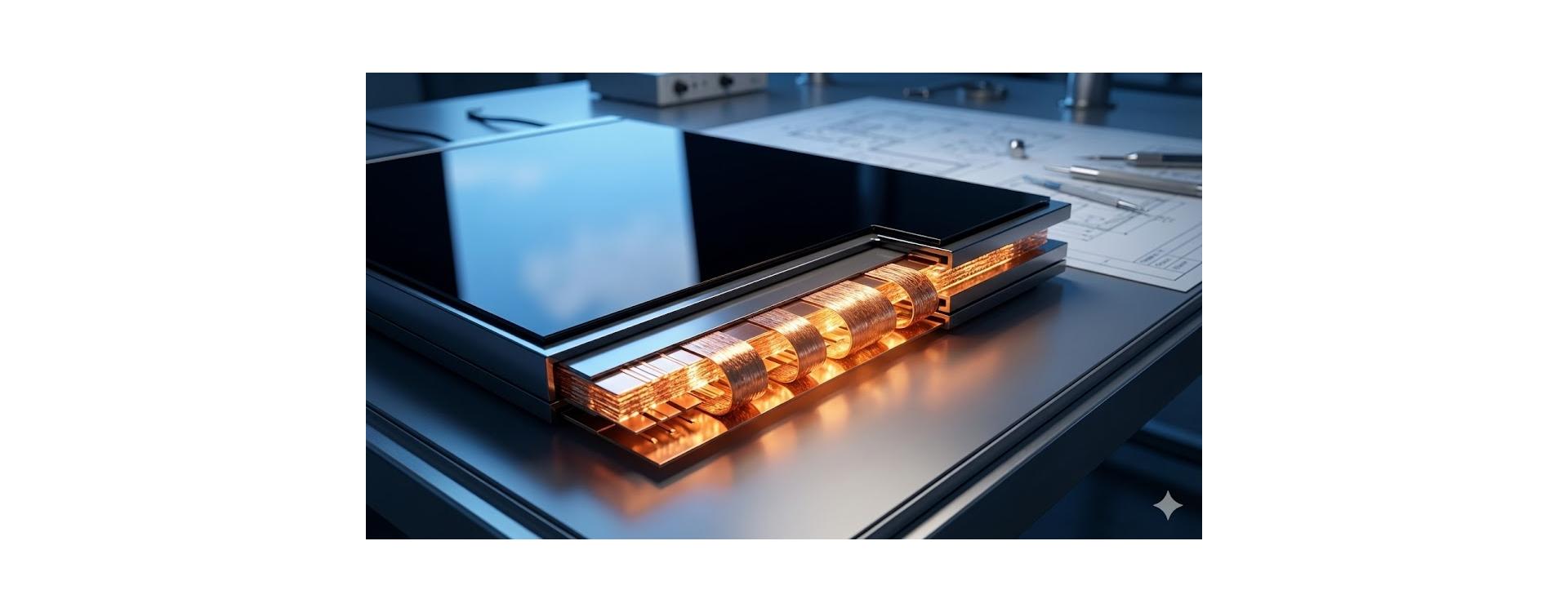
For years, the solar industry has dreamt of All Back Contact (ABC) photovoltaic cells: revolutionary cells in which all the electrical contacts are placed at the back, leaving 100% of the front face free to capture light. The problem? The manufacturing processes were too complex and expensive for viable mass production. Aiko Solar changed all that by becoming the first manufacturer to industrialise this technology on a 10 GW scale, thanks to three major innovations: ultra-fast laser engraving, 0BB (Zero Busbar) technology and silver-free copper interconnection.
At Wattuneed, we offer these next-generation solar panels that are redefining the standards of efficiency, durability and aesthetics. Discover why the Aiko revolution is not just a technological promise, but an industrial reality available today in our catalogue.
The challenge of industrialising ABC cells: why it was so difficult
Photolithography: a technological bottleneck
ABC cells require extremely precise patterning to create the back micro-contacts. Traditionally, this stage has relied on photolithography, a technique borrowed from the semiconductor industry. The problem? This process is :
- Extremely expensive: requiring clean rooms and sophisticated equipment
- Slow: incompatible with industrial production rates (several GW per year)
- Complex: multiple masking stages, UV exposure, chemical development
- Unflexible: difficult to adapt patterns without redoing the entire line
As a result, ABC cells were confined to space applications or small premium production runs, with prohibitive costs for the residential and commercial markets.
Dependence on silver: an economic and environmental handicap
The second major obstacle was the massive use ofmetallic silver for electrical contacts. Although silver offers excellent conductivity, it poses a number of major problems:
- Volatile cost: the price of silver can double in a few months on world markets
- Environmental impact: energy-intensive mining and limited resources
- Mechanical fragility: silver pastes create areas of micro-cracking during soldering operations
- Accelerated degradation: silver wires can corrode over time, reducing the life of modules
Aiko's challenge: to replace photolithography with an industrialisable technique AND to eliminate silver completely without sacrificing performance. A double technological challenge that few dared to take up.
Aiko's triple technological revolution
Innovation no. 1: Femtosecond/picosecond laser engraving
Aiko is the first manufacturer in the world to use ultra-fast laser engraving on an industrial scale for patterning ABC cells. But what does this mean in practice?
What is a femtosecond/picosecond laser?
A femtosecond laser emits incredibly short pulses of light:
- 1 femtosecond = 0.000 000 000 000 001 seconds (10-¹⁵ s)
- 1 picosecond = 0.000 000 000 001 second (10-¹² s)
This extreme brevity allows the material to be vaporised without heating adjacent areas. It's like cutting with surgical precision: the laser removes only the targeted atoms, without damaging the surrounding silicon or creating areas of thermal stress.
Advantages for mass production
| Criterion | Traditional photolithography | Aiko femto/picosecond laser |
|---|---|---|
| Production speed | Slow (multiple stages) | Ultra-fast (direct etching) |
| Complexity | Very high (clean room required) | Simplified (automation) |
| Equipment cost | Prohibitive | Optimised for industry |
| Accuracy | Excellent but rigid | Excellent AND flexible |
| Industrial capacity | Limited (< 1 GW) | Massive (10 GW proven) |
Thanks to this innovation, Aiko has been able to increase production capacity by a factor of 10 while reducing manufacturing costs. This is the first time in the history of photovoltaics that a premium technology has become accessible on a large scale.
Innovation no. 2: 0BB (Zero Busbar) technology
The second revolution concerns the way in which electricity is collected and transported inside the panel. Traditional panels use busbars: wide, visible metal strips that run through the cells.
What is 0BB?
Zero Busbar technology completely eliminates these busbars. Instead, Aiko uses a direct connection between the conductive ribbons and the fine laser-engraved grid lines. The benefits are manifold:
- No conventional soldering: no more thermomechanical stress points
- Fewer micro-cracks: the ribbons distribute stress evenly
- Better resistance to thermal cycles: day/night variations no longer affect the weld points
- Fewer hotspots: uniform current distribution
Impact on durability
Reliability tests show that 0BB panels are more resistant to accelerated ageing tests:
- Mechanical load test (IEC 61215): no cracks detected after 5000 cycles
- Thermal cycling test: resistance to up to 400 cycles (-40°C to +85°C) without degradation
- Humidity-freeze test: 98% power retention after 100 cycles
Manufacturing innovation: Aiko's 0BB is not just a concept. It's a stable and reproducible production on the scale of 10 GW per year, validated by years of ramp-up in the Zhuhai factories.
Innovation no. 3: Copper interconnection (Silver-Free)
Aiko's third technological breakthrough involves the total replacement of silver by copper. This technical feat represents a major metallurgical challenge.
Why copper rather than silver?
| Property | Silver (Ag) | Copper (Cu) Aiko |
|---|---|---|
| Electrical conductivity | Excellent (63 MS/m) | Very good (59 MS/m, -6%) |
| Material cost | ~800 €/kg (volatile) | ~8 €/kg (stable) |
| Price stability | Highly volatile | Predictable |
| Abundance | Limited supply | Abundant resource |
| Mechanical resistance | Fragile (silver pastes) | Superior (coating) |
| Service life in real-life conditions | Good (25 years) | Excellent (30+ years) |
The challenge of copper coating
Copper is naturally more reactive than silver: it oxidises quickly and can diffuse into the silicon. Aiko has developed a patented coating process that offers four major advantages:
- Protects copper from oxidation with nanometric barrier layers
- Prevents diffusion into the active areas of the cell
- Maintains excellent conductivity throughout the life of the panel
- Can be integrated into production lines without slowing down production rates
This innovation required 5 years of R&D and hundreds of millions of euros of investment. Today, it enables Aiko to offer panels 15 to 20% cheaper than silver-based equivalents, while guaranteeing superior performance.
Bonus innovation: contactless testing
An often overlooked but crucial technology: non-contact testing equipment. Why is this important?
- ABC cells are extremely thin and sensitive to micro-cracks
- Traditional electrical tests use probes that press against the cell
- Aiko uses optical and magnetic sensors to test without touching.
- Result: zero risk of breakage during quality control
This attention to detail ensures that every Aiko panel leaving the factory is intact and at full performance.
Technology comparison: ABC vs TOPCon vs PERC
To fully understand Aiko's technological lead, let's compare the three main families of photovoltaic cells currently on the market.
| Criterion | PERC (Current Standard) | TOPCon (Premium) | ABC Aiko (New generation) |
|---|---|---|---|
| Module efficiency | 19-21,5% | 23-25% | 24-26% |
| Frontal shading | ~3% (busbars + grilles) | ~2% (optimised busbars) | 0% (all rear) |
| Temperature coefficient | -0,40%/°C | -0,30%/°C | -0.26 to -0.30%/°C |
| Degradation year 1 | 2-3% | ~1% | < 1% |
| Annual degradation | 0,45-0,50% | ~0,40% | 0,35% |
| Performance over 30 years | ~80% | ~87% | > 88% |
| Shading tolerance | Low (bypass diodes) | Medium | Excellent (+20-30% vs TOPCon) |
| Aesthetics | Visible louvres | Fine visible louvres | Homogeneous black surface |
| Risk of micro-cracks | High (multiple welds) | Medium | Minimal (0BB) |
| Use of silver | ~100 mg/cell | ~80 mg/cell | 0 mg (total copper) |
| Production cost | Reference (1.0x) | +10-15% | +10-20% |
| Availability | Very wide | Wide | Limited (Aiko, Maxeon) |
Reading the table: what it means in concrete terms
ABC benefits
- Maximum efficiency: up to 5 percentage points more than standard PERC
- Exceptional longevity: retains 88% power after 30 years (compared with 80% for PERC)
- Performance in real-life conditions: better tolerance of partial shading (TÜV Class A certified)
- Premium aesthetics: homogenous black facade with no visible lines
- Ecology: 0 mg of silver = reduced carbon footprint and controlled costs
ABC trade-off
- Slightly higher purchase price: +10-20% compared with TOPCon (but offset by performance and lifespan)
- Limited availability: few manufacturers have mastered this technology on an industrial scale
- Lower bifacial gain: bifaciality factor of 70% (vs. 80-85% for TOPCon) due to the size of the rear contacts
Aiko panels at Wattuneed: accessible technology
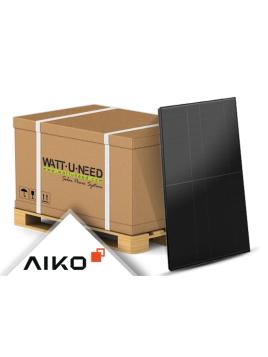
At Wattuneed, we are proud to offer Aiko NEOSTAR solar panels, which incorporate all these revolutionary innovations. These modules represent the best technology/price ratio on the market for demanding installations.
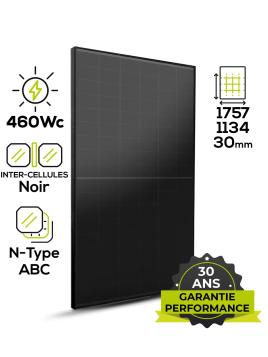
AIKO NEOSTAR 2S Mono Glass Gen2 460Wp
The ABC panel now available from Wattuneed
Technical specifications
- Power: 460 Wp
- Efficiency: 23.1
- Dimensions: 1757 x 1134 x 30 mm
- Weight: 21.5 kg
- Open circuit voltage: 41.06 V
- Product warranty: 25 years
- Performance guarantee: 30 years at > 87.4
- Aesthetics: homogeneous Full Black
Why choose Aiko at Wattuneed? We only select panels that have proved themselves in real-life conditions. Aiko combines ground-breaking innovation AND proven industrial reliability (10 GW of stable production). It's this rare combination that justifies our choice.
Who are Aiko panels designed for?
Aiko modules are particularly recommended for :
High-end residential installations
- Roofs with limited space: the 23.1% yield means you can achieve the desired power with fewer panels
- Modern architecture: the Full Black design with no grids blends in perfectly
- Sites with partial shading: TÜV Class A certification for shading performance (+20-30% vs. competitors)
- Owners looking for the best technology: ABC represents the state of the art in photovoltaics
Commercial and tertiary projects
- Buildings with aesthetic requirements: shopping centres, hotels, office buildings
- Complex roofs: chimneys, skylights, various obstacles (excellent shade tolerance)
- Projects looking for the best TCO (Total Cost of Ownership): lifetime of 30+ years at > 88% performance
Professional installers
- Commercial differentiation: offering the most advanced technology on the market
- Ease of installation: standard format, optimised weight, no fragile welds
- Customer satisfaction: premium aesthetics + long-lasting performance = satisfied customers and recommendations
Concrete benefits for your installation
1. More power from the same surface area
Let's take a concrete example:
| Panel type | Yield | Number of panels for 6 kWp | Total surface area |
|---|---|---|---|
| Standard PERC 410W (20%) | 20% | 15 panels | ~30 m² |
| TOPCon 450W (22%) | 22% | 14 panels | ~28 m² |
| Aiko ABC 460W (23.1%) | 23,1% | 13 panels | ~26 m² |
Real savings: 4 m² of roof space freed up (i.e. around 15% less space), while producing the same annual energy. This can make all the difference on a constrained roof.
2. Production maintained in difficult conditions
Aiko's ABC panels shine in situations where conventional panels lose a lot of energy:
Low-light performance
- Morning and evening: +5 to 8% production thanks to the absence of frontal shading
- Overcast: optimised capture of diffuse light
- Winter: low solar angle compensated by 100% light collection on the front face
Performance with partial shading
TÜV Rheinland Class A certification for shading performance:
- Nearby tree: production loss limited to 10-15% (compared with 30-40% for conventional panels)
- Chimney: impact reduced by 20-30% thanks to optimisation at cell level
- Partial snow accumulation: production maintained in uncovered areas
High temperature performance
Temperature coefficient of -0.26 to -0.30%/°C:
- At 65°C (panel temperature in midsummer): loss of only 10-12% (compared with 16-18% for PERC)
- Over 30 years in a hot climate: cumulative gain of 8 to 12% in energy produced.
3. Exceptional durability and reliability
Aiko panels are designed to last a minimum of 30 years with minimal degradation:
| Year | PERC standard | TOPCon premium | Aiko ABC 460W |
|---|---|---|---|
| Year 1 | 97-98% (high LID) | ~99% | > 99% |
| Year 10 | ~93% | ~95,5% | ~96,5% |
| Year 25 | ~84% | ~89% | ~91% |
| Year 30 | ~80% | ~87% | > 88% |
Concrete translation: After 30 years, a 6 kWp Aiko system will still produce 5.3 kWp, whereas an equivalent PERC system will only produce 4.8 kWp. Over its lifetime, this represents a difference of several thousand kWh.
4. Optimised return on investment
Let's calculate the TCO (Total Cost of Ownership) over 30 years for a 6 kWp installation in Belgium:
Assumptions: Initial investment +15% for Aiko vs PERC, annual production of 5500 kWh (Belgium), electricity rate €0.30/kWh average over 30 years, identical maintenance.
| Substation | PERC 6 kWp | Aiko ABC 6 kWp | Difference |
|---|---|---|---|
| Initial investment | 10 000 € | 11 500 € | +1 500 € |
| Total production 30 years | ~145,000 kWh | ~158,000 kWh | +13,000 kWh |
| Value of electricity saved | 43 500 € | 47 400 € | +3 900 € |
| Net return over 30 years | 33 500 € | 35 900 € | +€2,400 (i.e. +7%) |
Result: despite an initial investment of €1,500 more, the Aiko system generates €2,400 more over 30 years. And this calculation does not take into account the added aesthetic value or the greater tolerance to shading in real-life conditions.
Installation and maintenance: guaranteed simplicity
Easy installation
Contrary to popular belief, ABC Aiko panels are just as easy to install as conventional modules:
- Standard format: 1757 x 1134 mm (compatible with all mounting systems)
- Optimised weight: 21.5 kg (manageable for a team of 2 people)
- MC4 connectors: industry standards, no special tools required
- Inverter compatibility: voltage and current compatible with all residential inverters
- No fragile solder joints: 0BB technology eliminates fragile points during handling
Reduced maintenance
ABC panels require even less maintenance than conventional modules:
- Easy cleaning: smooth surface with no busbars = less dirt build-up
- No soldering points to monitor: 0BB technology eliminates the risk of disconnection
- Standard monitoring: compatible with all monitoring systems (inverters with integrated monitoring)
- Weatherproof: IEC 61215 certification (hail, wind, snow)
Wattuneed tip: annual cleaning with clean water is sufficient in most cases. In dusty or heavily polluted areas, cleaning every six months can improve production by 2-3%.
The future of photovoltaics: where is ABC technology heading?
ABC technology is still in its infancy in terms of potential. Aiko and others are already working on the next generation:
Ongoing improvements
Even higher yields
- 2026 target: residential modules at 26-27% efficiency
- Laboratory: ABC cells already achieve 26.5% under optimal conditions
- Theoretical limit: silicon can achieve around 29% (significant room for improvement)
Technological combinations
Aiko is exploring synergies with other technologies:
- ABC + Perovskite: tandem cells that can exceed 30% efficiency
- ABC + optimised bifacial: improving the bifaciality factor to 75-80%.
- ABC + Thin films: reduced weight and use of silicon
Continuous cost reduction
- Automation: production lines increase from 10 GW to 14 GW then 20 GW
- Scale effects: cost per watt reduced by 5-8% per doubling of capacity
- Optimisation of copper: reduction in coating thickness without loss of performance
Vision 2030: According to industry projections, ABC panels could account for 30-40% of the residential market by 2030, with costs on a par with today's TOPCon but 20-25% better performance.
Positive environmental impact
In addition to performance, Aiko's ABC technology contributes to more sustainable photovoltaics:
- Elimination of silver: savings of around 100 mg of silver per cell = resources preserved
- Better carbon footprint: 30+ year lifespan = longer energy payback period
- Cleaner production: laser replaces chemical baths in photolithography
- Fewer modules needed: higher efficiency = less transport, less packaging
Energy payback time: an Aiko panel "pays back" the energy needed to manufacture it in 18-24 months under Belgian conditions, then produces clean energy for 28+ years.
FAQ : Your questions about Aiko ABC technology
1. What is the real lifespan of Aiko ABC panels with 0BB technology?
Answer: Aiko NEOSTAR panels are guaranteed for 30 years at over 87.4% initial power. Thanks to 0BB technology, which eliminates conventional soldering, accelerated ageing tests show a physical life of up to 35 to 40 years. Annual degradation is limited to 0.35% after the first year (compared with 0.45-0.50% for standard PERC panels).
2. Does 0BB technology resist micro-cracks better than conventional panels?
Answer: Yes, significantly. IEC 61215 tests show that 0BB panels withstand more than 5,000 cycles of mechanical loading without the appearance of micro-cracks, compared with 2,000-3,000 cycles for modules with welded busbars. The direct connection between ribbons and grids distributes the thermomechanical stresses evenly, eliminating the concentrated stress points of traditional welding.
3. How does 0BB technology affect temperature performance (temperature coefficient)?
Answer: Aiko ABC 0BB panels have a temperature coefficient of -0.26 to -0.30%/°C, better than PERC (-0.40%/°C) and comparable to the best TOPCon. In practice, at 65°C (panel temperature in summer), an Aiko system loses 10-12% power compared with 16-18% for a PERC system. The absence of soldering also reduces hotspots, improving overall thermal distribution.
4. Do ABC 0BB panels require any special maintenance to maintain their performance?
Answer: No, on the contrary. The homogeneous surface with no protruding busbars accumulates less dirt and makes cleaning easier. Annual cleaning with clean water is sufficient in most regions. The 0BB technology eliminates welding points that could corrode, reducing the need for maintenance. Aiko panels are also tested to withstand 100 moisture-freeze cycles without degradation.
5. What is the real performance difference between 0BB and modern multi-wire busbars (MBB)?
Answer: Multi-wire busbars (MBB, 9-16 wires) have reduced frontal shading to around 1.5-2% (vs. 3% for conventional busbars). Aiko's 0BB goes further with 0% frontal shading, gaining a further 1.5-2 percentage points of yield. More importantly, the 0BB completely eliminates soldering, the source of 80% of early failures in MBB modules. In real-life conditions over 25 years, this translates into a failure rate divided by 3 to 5.
Why choose Wattuneed for your Aiko panels?
At Wattuneed, we don't just sell solar panels. We select technologies that have been tried and tested AND that represent the future of photovoltaics.
Our quality commitment
Rigorous selection
We only offer panels that have passed our validation tests
Available stock
Fast delivery from our warehouse in Belgium
Expert advice
Our technical team will guide you through the optimum dimensioning process
Extensive warranties
We follow manufacturer's warranties for the duration of the contract
Competitive prices
Large volumes = better prices for our customers
Associated services
- Technical support: 24-hour response to your installation questions
- Secure delivery: reinforced packaging, transport insurance included
- Network of installers: put you in touch with certified professionals
- Profitability calculation: online tool to estimate your production and ROI
Conclusion: ABC, a revolution now within reach
Aiko Solar's ABC technology represents much more than an incremental improvement in photovoltaics. It is a technological breakthrough that combines three major innovations:
- Femtosecond/picosecond laser engraving: replaces complex photolithography with a process that can be industrialised on a large scale.
- 0BB (Zero Busbar) technology: eliminates fragile solder joints and drastically improves long-term reliability
- Silver-free copper interconnection: reduces costs and the environmental footprint while increasing lifetime
What makes this revolution particularly significant is that it is no longer confined to the laboratory. With 10 GW of production capacity already operational and 14 GW under construction, Aiko has proved that technological excellence can be mass-produced and sold at reasonable prices.
For demanding consumers and installers keen to offer the best, the Aiko panels available from Wattuneed today represent the optimal choice: maximum performance, exceptional durability, premium aesthetics and controlled prices.
The ABC revolution is underway. And it's now available to everyone.
Contact us for your solar project
Would you like to equip your installation with Aiko ABC technology? Our team of experts will be happy to :
- Size your installation according to your actual needs
- Calculate your production and profitability over 30 years
- Advise you on the best configuration (orientation, inclination, any optimisers)
- Put you in touch with certified installers in your region
Wattuneed
Rue Henripré 12
4821 Andrimont, Belgium
Telephone: +32 87 45 00 34
Email : info@wattuneed.com
Opening hours : Monday - Friday : 9h00 - 18h00
Technology evolves rapidly. We select for you the best "Generations" of panels available on the market. Technical specifications may change with new product versions. Please do not hesitate to contact us to find out about the latest innovations available.