Since 2008
Based in Belgium and France
+ 60 000 clients
Our blog
A.S.S.
Shopping Cart
Découvrez comment installer, configurer et utiliser WatchPower pour surveiller votre onduleur solaire en temps réel....
Practical guide to reconnect your SMA Sunny Boy inverter to the WiFi network after a change of modem, router or...
Find out how Aiko is revolutionising photovoltaics with its silver-free ABC cells, laser engraving and 0BB...
Ajouter des batteries LiFePO4 neuves à un parc existant exige un équilibrage préalable rigoureux. Découvrez pourquoi...
Find out how the Walloon incentive tariff 2026 and dynamic contracts radically transform the electricity bill of...
Electric vehicles represent a significant investment (€40,000 to €80,000), with the battery accounting for 30 to 40% of the total value. With capacities ranging from 40 kWh to over 100 kWh, these batteries are generating increasing interest for home energy storage via V2G, V2H, and V2L technologies.
But beware: marketing promises about the durability of vehicle batteries and their use in energy storage mask a much less rosy reality. Actual degradation is two to three times faster than manufacturers claim , and intensive V2G use can void your warranty or cost you €12,000 to €20,000 for out-of-warranty replacements.
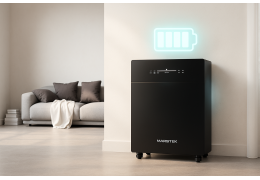
"At Wattuneed, our recommendation is clear: for home energy storage, opt for a dedicated LFP stationary battery (like our 15 kWh model at €2400 including VAT) rather than prematurely wearing out your electric vehicle's battery, a valuable and expensive asset to replace."
In this guide, we reveal the truth about different battery chemistries , real degradation data (far from marketing promises), the pitfalls of manufacturer warranties , and why a stationary solar battery remains the safest and most cost-effective choice for your photovoltaic installation.
Genuine customer testimonial: "My Tesla Model X with 69,000 km has only 89% usable capacity left, a loss of 11%. I can clearly see its wear and tear in charging speed and actual range." – Tesla owner for 2 vehicles
Sources: Reddit r/TeslaLounge, Tesla Motors Club, Geotab 2024-2025 studies, Tessie App user feedback
Major implication: A vehicle with 70,000 km has already lost 8-12% of its capacity. Using it daily for V2G will accelerate this degradation irreversibly.
NMC batteries equip the majority of European electric vehicles: Volkswagen ID.3/4, Hyundai Ioniq 5, Kia EV6, Renault Mégane E-Tech, Peugeot e-208, etc.
Benefits :
MAJOR drawbacks (often hidden):
LFP batteries are used in: Tesla Model 3 Standard Range, BYD, Dacia Spring, some MG models and Chinese vehicles.
Disadvantages:
Primarily Tesla Model S and Model X (older versions up to 2022).
Features :
The V2L allows you to power portable devices via a 230V socket (2.3 to 3.6 kW).
Reasonable use: Camping, construction sites, occasional repairs (a few hours per month)
Battery impact: Negligible if used < 10 times/year
Equipped vehicles: Hyundai Ioniq 5/6, Kia EV6/EV9, Dacia Spring, Renault 5 E-Tech, MG4/MG5, Peugeot e-3008
The concept: Use the vehicle's battery to power your home (7-10 kW)
⚠️ Real dangers:
The concept: Sell electricity back to the grid and generate passive income
🔴 The economic reality:
Realistic calculation:
"Using a €40,000-€60,000 electric car battery to save €200/year on V2G is like using a €50,000 professional tool to save €200 per year. It's economically irrational." – Wattuneed Expert
Profile: House consuming 20 kWh/day, 6 kWp installation (production 25 kWh/day in summer)
V2G solution (60 kWh NMC vehicle):
Wattuneed solution (stationary 15 kWh LFP battery):
Discover our LFP stationary batteries
All our batteries: 10-year warranty, 6000+ cycles, LFP CALB/EVE prismatic cells, CE certified
Standard warranty: 8 years or 160,000 km with a minimum of 70% capacity maintained
⚠️ Translation: They anticipate and allow for 30% loss ! Your battery can lose 30% without them intervening.
⚠️ Crucial advice: Before making any V2G investment, ask your dealer in writing if daily V2H/V2G use is covered by the warranty. Most will refuse to do so.
Vehicle battery (example VW ID.3, 58 kWh NMC):
Wattuneed stationary battery (15 kWh LFP):
Conclusion: A vehicle battery costs 5 times more per kWh stored than a dedicated LFP stationary battery!
Calculate your storage needs
Optimal configuration:
Data :
With a Wattuneed 15 kWh stationary battery:
Required equipment:
Request a free personalized study
Answer: Ask in writing if the battery warranty explicitly covers daily V2G use and additional cycles. Check the financial balance: does the V2G revenue (€200-€400/year) offset the accelerated wear of your battery (value: €12,000-€20,000)? In 90% of cases, the answer is no.
Answer: Yes, and it's even recommended! This allows you to preserve your vehicle for mobility while optimizing your 24/7 solar self-consumption. The stationary battery will always be present, unlike your vehicle which may be in motion.
Answer: Simple rule: 50-70% of your consumption should be at night . For a house consuming 20 kWh/day (14 kWh at night), aim for 7-10 kWh of storage. Use our free sizing calculator .
Answer: Yes, real-world data confirms 2,500-4,000 cycles for LFP batteries versus 1,200-1,800 for NMC batteries. Our Wattuneed batteries are certified for 6,000+ cycles with a 10-year warranty, which is 2-3 times more than vehicle batteries.
Answer: Complete replacement costs between €8,000 and €22,000 depending on the model. This is why it's crucial to preserve this asset and avoid premature wear with intensive V2G use. A stationary battery costing €2,400 can be replaced without significant financial hardship.
Answer: Yes, this is the optimal configuration! Your hybrid inverter manages priorities: (1) home consumption, (2) charging stationary battery, (3) charging vehicle with excess power. Everything is automated via the monitoring app.
Electric vehicles represent a major investment (€40,000 to €80,000), with the battery accounting for 30 to 40% of that value. Real-world degradation data shows that vehicle batteries wear out two to three times faster than marketing claims suggest , with an 8-15% loss over 100,000 km in standard use.
Using this expensive battery for home energy storage via V2G/V2H is economically risky:
The smart solution recommended by Wattuneed:
Advantages of this approach:
At Wattuneed, we believe in transparency and protecting your investments. Don't be swayed by V2G marketing promises that conceal hidden costs and real risks. Choose a dedicated, reliable, and guaranteed solution that respects both your electric vehicle and your budget.
Discover our LFP stationary batteries. Request a free study.
Wattuneed SPRL – Your Belgian partner for photovoltaic and energy storage solutions. Transparency, honest advice, and personalized support for your energy transition.📞 Contact: support.wattuneed.com | 🔧 Toolbox: Calculators and sizing tools | 📚 Blog: Photovoltaic Guide💚 Our philosophy: Protect your investments, choose dedicated and sustainable solutions.
check_circle
This store asks you to accept cookies for performance, social media and advertising purposes. Social media and advertising cookies of third parties are used to offer you social media functionalities and personalized ads. Do you accept these cookies and the processing of personal data involved?