Since 2008
Based in Belgium and France
+ 60 000 clients
Our blog
A.S.S.
Shopping Cart
Detailed comparison between the integrated Sofar ESI ecosystem (inverter + BTS battery) and the maximum flexibility...
Découvrez le système triphasé 15 kVA Wattuneed : 29 panneaux AIKO ABC 460W, 3 onduleurs Victron MultiPlus-II, 30 kWh...
The solar battery industry is undergoing a major technological revolution: active thermal management, sodium-ion,...
Are you considering equipping your motorhome, boat, tiny house or home with a photovoltaic system? The first question...
Discover how to configure Deye Copilot step by step to maximise your energy savings. Comprehensive guide with...
The year 2025 marks a turning point for domestic batteries in France and Belgium. With the dramatic collapse of the French photovoltaic feed-in tariff in March 2025 (from €0.1269/kWh to €0.04/kWh), energy storage is no longer a luxury option: it has become the essential solution for maximising the profitability of your solar installation.
What happened:
📊 VERDICT: Storing 1 kWh with a battery now yields 5.7 times more than reselling it to the grid!
With battery prices at an all-time low (€159-208/kWh at Wattuneed), the return on investment for a storage installation is now 3-5 years in Belgium and 5-7 years in France for a typical prosumer profile.
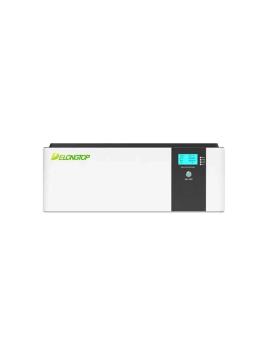
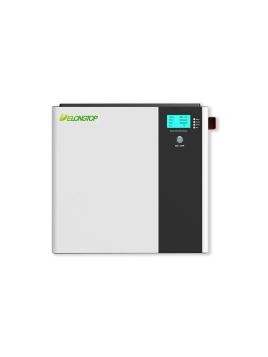
💡 Recommended product: Delong Top Energy 5.12 kWh battery – £968 including VAT
Complete LiFePO4 solution, 6,500 cycles, BYD Grade A cells, £189/kWh
Without a battery, your self-consumption rate is capped at 30-40%: the surplus produced during the day is sold back to the grid at £0.04/kWh (France) or £0.04-0.06/kWh (Belgium). With a battery, this rate rises to 70-85%, and each kWh stored avoids a grid purchase at £0.27/kWh (France) or £0.30/kWh (Belgium).
Sources: CRE, EDF OA Solaire (Q1 2025 tariff decree), SPF Economy Belgium, CREG
In Wallonia and Brussels, the capacity tariff (€56-87/kW/year depending on the DSO) charges you for your monthly peak consumption. A battery smooths out these peaks by discharging during peak times,saving you €150-300/year depending on your profile.
Modern batteries offer a UPS function (hybrid inverter required): in the event of a power cut, your installation switches to island mode in <15 ms, maintaining power to critical circuits (refrigerator, internet box, heating, etc.).
Delong Top Energy 5.12 kWh – £968 including VAT (€189/kWh)BYD LiFePO4 Grade A cells • 6,500 cycles • 10-year warranty
"For domestic storage, LiFePO4 is the benchmark chemistry: maximum safety, exceptional longevity and unbeatable total cost of ownership over 15 years."
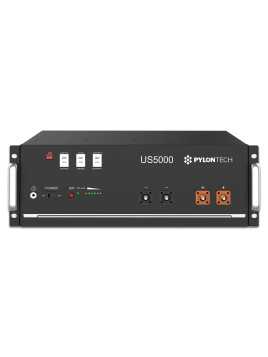
Wattuneed batteries (Delong, Pylontech) incorporate certified Grade A cells:
Example of a standard French house with a 6 kWp installation:
Wattuneed formula:
Battery capacity = 50-80% of average daily PV surplus
In our example: Average annual surplus = ~7 kWh/day → Optimal capacity = 4-6 kWh
Enter your data (PV production, consumption) and instantly obtain the optimal capacity + personalised product selection.
Here are 6 real scenarios calculated using actual Wattuneed 2025 prices:
* Battery cost only (hybrid inverter not included: +£1,200-1,800)
"Since March 2025, the ROI of a domestic battery in France has been halved. Self-consumption is no longer an ecological choice, it is a rational economic choice."
An electric vehicle (EV) consumes an average of 15-20 kWh/100 km. For daily use of 40 km/day (14,600 km/year), this represents:
With a 9 kWp installation + 10 kWh battery + smart charging station:
Vehicle-to-Home (V2H) and Vehicle-to-Grid (V2G) technologies allow energy from EVs to be fed back into the home or grid. Situation in 2025:
Wattuneed 2025 verdict: V2H is interesting for large-scale backup (rural areas, frequent power cuts) but has a high entry cost. V2G is still marginal. Stationary batteries remain more cost-effective for everyday use.
Collective self-consumption (ACC) allows several consumers to share the electricity produced by a common installation. Conditions in 2025:
🔑 Key to success: cost sharing + capacity tariff avoided + high self-consumption rate thanks to 12 staggered consumption profiles.
Symptom: battery never charged to 100%, incomplete cycles, ROI extended by 2-3 years.
Solution: apply the 50-80% average surplus rule. A battery at 90% daily charge is ideal.
Symptom: battery drained at 2 a.m., grid purchase in the middle of the night.
Solution: measure actual night-time consumption (base + refrigerator + standby + HC water heater) before sizing. Add a 20% margin.
Symptom: battery not recognised, BMS not communicating, inefficient charging.
Solution: check BMS/inverter compatibility on the product sheet. Delong/Pylontech compatible inverters: Deye, WKS, Victron, SMA, Goodwe, Growatt, Sofar, SolaX.
Symptom: reduced capacity in winter, BMS in thermal protection in summer.
Solution: install the battery in a temperate room (ideally 5-30°C). Avoid uninsulated garages (FR/BE) and rooms >35°C in summer.
Symptom: final bill increased by €114-342 excluding VAT per battery.
Solution: always add the Bebat contribution to the basket (mandatory in Belgium):
Symptom: loss of 2-3 years of savings (€1,500-2,000) while waiting for a hypothetical price drop.
Solution: 2025 prices are at an all-time low (€159-208/kWh vs €600-800/kWh in 2020). Each year of waiting = 1 year of lost savings.
Symptom: a "10 kWh" battery only provides 8 kWh in reality, resulting in a surprise regarding range.
Solution: check the authorised depth of discharge (DoD). Wattuneed batteries: DoD 95% (nominal capacity ≈ usable capacity).
Virtual Power Plants aggregate thousands of domestic batteries to provide grid services (balancing, peak shaving). Situation in 2025 FR/BE:
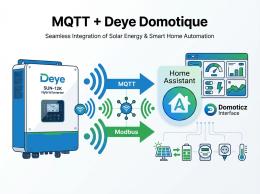
Wattuneed compatibility: Deye, WKS Evo Circle Pro and Victron inverters compatible with VPP via MQTT/Modbus API.
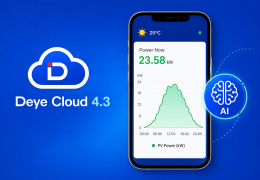
Dynamic pricing is coming to France (Tempo 2.0 planned for 2026) and Belgium (capacity pricing already dynamic). AI algorithms (e.g. Deye Copilot, available from Wattuneed) automatically optimise:
Estimated gain: +15-25% annual savings vs. static management.
The European RED III Directive requires the traceability of electricity origin from 2025 onwards. Blockchain projects enable:
Status in 2025: still experimental in France and Belgium, but legal framework in preparation (collective self-consumption ordinance 2.0 expected in 2026).
France:
Belgium:
LiFePO4 batteries require very little maintenance:
Wattuneed warranty: Delong and Pylontech guarantee ≥80% capacity after 10 years (i.e. SOH ≥80%).
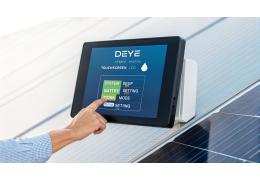
Modern inverters allow you to program scenarios:
Deye Copilot example (integrated AI): measured gain of +18% annual savings vs static programming.
A Grade A LiFePO4 battery (Delong, Pylontech) lasts 10-15 years in daily use (6,000-6,500 cycles at 80% DoD). After 10 years, it retains ≥80% of its initial capacity (manufacturer's warranty). Beyond 15 years, it can be used for secondary purposes (light backup) before recycling.
Yes, in 95% of cases! There are two solutions:
Compatibility: check that the battery voltage (48V/51.2V) is compatible with the new hybrid inverter.
YES, if hybrid inverter with UPS/backup function. In the event of a power cut:
⚠️ Important: backup function disabled by default on some inverters (e.g. Deye) for network compliance. Activation via installer menu.
Key factor: since March 2025, the ROI in France has been halved thanks to the purchase/resale difference increasing from 0.14 euros/kWh to 0.23 euros/kWh.
Technically yes, but not recommended:
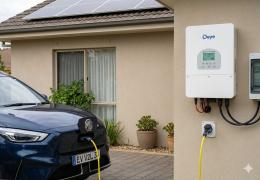
Optimal solution: smart charging station that prioritises surplus PV to charge the EV during the day and reserves the domestic battery for the home at night.
● This video explains how to avoid the prosumer tax in Belgium with a solar battery. Discover how to optimise your self-consumption, reduce your electricity bills and gain energy independence.
Wattuneed SPRLRue Henripré 12, 4821 Andrimont, BelgiumTel: +32 87 45 00 34 – info@wattuneed.comwww.wattuneed.com | Technical support | Toolbox
check_circle
This store asks you to accept cookies for performance, social media and advertising purposes. Social media and advertising cookies of third parties are used to offer you social media functionalities and personalized ads. Do you accept these cookies and the processing of personal data involved?