Since 2008
Based in Belgium and France
+ 60 000 clients
Our blog
A.S.S.
Shopping Cart
ORES rejects 27 high-voltage substations and warns of 10,000 vulnerable circuits. The much-vaunted PV + heat pump duo...
Maîtrisez l'application SOLARMAN Smart pour piloter et surveiller votre onduleur depuis votre smartphone ou PC en...
Guide expert pour le démarrage automatique de groupe électrogène (AGS). Comparatif des configurations sur Victron...
Systèmes all-in-one (Zendure, EcoFlow, Bluetti, Marstek) vs modulaires (Deye, Victron + Pylontech) : comparatif...
Guide complet sur les disjoncteurs électriques : calibre, courbes B/C/D, sections de câbles, dimensionnement AC/DC...
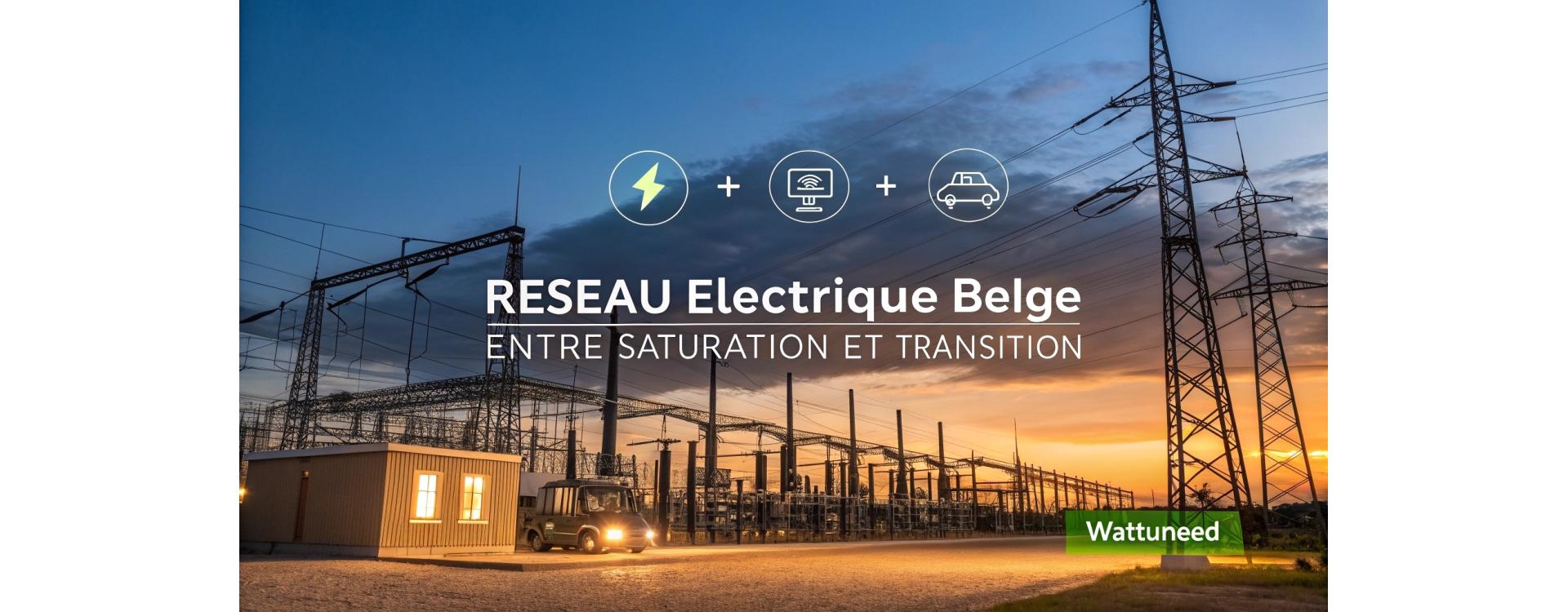
For several years now, the message has been hammered home by public authorities, the media and those involved in the energy transition: photovoltaic panels (PV) + heat pump (PAC) + electric vehicle (EV) = successful transition. On paper, the equation looks coherent: we electrify our homes and supply them with decentralised renewable energy.
In real life, this equation becomes fragile - even dangerous - as soon as we introduce two realities that nobody wants to face:
In December 2025, ORES, Wallonia's main distribution network operator (GRD), sounded the alarm in an explosive internal document presented at its general meeting. The punch line that should be at the centre of the public debate:
"The model of 'everything, everywhere, all the time and right away' is no longer sustainable today." - ORES, December 2025
ORES identifies 4 simultaneous revolutions that are piling up on the same ageing infrastructures:
So it's not a question of "liking electricity" or "hating oil/gas". The problem is believing that we can electrify on a massive scale without demand management, storage, flexibility and back-up solutions.
The official data published by ORES in December 2025 paint a stark picture of the critical state of the Walloon electricity network:
At the same time, connection requests are exploding at an unsustainable rate:
⚠️ CRITICAL SITUATION
This is no longer a theoretical discussion about the "future of the grid". This is a battle for access to electrical power, documented in black and white by the grid operators themselves. Businesses are being refused connections today, and private individuals are already experiencing malfunctions.
ORES points out that any electricity network has to deal with two types of inescapable physical constraints:
For years, the focus has been on overvoltage (PV injecting too much locally, inverters stalling in summer). Today, undervoltage is once again a major issue... because the demand for power is exploding with the electrification of heating and mobility.
ORES explicitly describes that at feeder level (neighbourhood low-voltage supply), there are now simultaneously:
And the figure is huge: 10,000 circuits out of 70,000 are deemed vulnerable to this double constraint. Historically, low-voltage networks were designed for unidirectional extraction (power station → house), not for managing bidirectional injection + tenfold consumption peaks.
"Low-voltage networks were originally designed for withdrawal. Electricity is now available locally and intermittently. Balancing the network has an increasing cost." - CWaPE, presentation December 2025
In an article published on 10 December 2025, Le Soir reveals a largely underestimated emerging problem: undervoltages on the Walloon grid. Unlike overvoltages (caused by excess photovoltaic production in summer), undervoltages result from simultaneous excessive consumption - exactly the scenario that the massive electrification of heating is causing.
ORES sets out a very concrete situation in black and white in its December 2025 presentation:
"If on the way home from work everyone recharges their cars, makes food, turns on the heat pump, is there a risk of encountering a voltage problem? Yes. The voltage could drop to 200V, a level at which the heat pump won't start." - ORES, internal presentation December 2025
When thousands of heat pumps start up simultaneously in cold weather (returning from work 5pm-8pm), combined with charging electric vehicles in the evening and preparing dinner, the grid voltage can drop below 207V. At this critical level:
18:00: Outside temperature -3°C, nightfall since 17:00Simultaneous consumption: 500 houses in a district- 300 heat pumps start up (3-5 kW each)- 150 electric vehicles charging (7-11 kW each)- Lighting + cooking + household appliances (2-3 kW per household)Result: Peak load of 2-3 MW on a transformer rated for 1.5 MWConsequence: Voltage drops to 195-200V → PAC does not start, EV slows down charging, risk of general disconnection
👉 This is a key point: a customer equipped solely with a heat pump for heating becomes dependent not only on the price of electricity and the availability of the grid, but also on local voltage quality - a parameter they have absolutely no control over and which deteriorates precisely at the times when they need it most.
The statement "high voltage is already saturated everywhere" is not an exaggeration. ORES provides a very telling snapshot of the situation at Elia transformer stations (high-voltage transmission network):
To put it plainly: 27 substations are already refusing, 58 will refuse within 5 years without any major changes, and only 35 out of 122 substations (29%) look like they could hold out in the medium term. The very notion of "guaranteed connection" is becoming obsolete.
ORES explicitly states that current contracts guarantee "all the power requested regardless of the time or season", but this permanent band is no longer, in many cases, a realistic/adapted solution.
Faced with this critical situation, the CWaPE (Walloon energy regulator) unveiled a major tariff reform in December 2025, applicable from 2026. The official objective, formulated in administrative language, is "to match production and consumption in order to reduce constraints on the network and control the cost of investment in infrastructure".
In pragmatic terms, this means that the grid can no longer guarantee constant power to everyone, all the time. Consumers are now being encouraged - or forced - to shift their usage to times when the network is under less strain.
The Walloon tariff decree, explicitly cited by the CWaPE, sets out two principles that seem contradictory but reveal the reality:
"Consumers who do not wish to contribute flexibility to the energy system must not be financially penalised by the new tariff structure... [but] each tariff component provides an incentive for network users who wish to do so to consume at a time when there is an abundance of electricity on the network." - Article 4, §2, paragraph 2, 27 of the Walloon tariff decree
In other words: we're not officially forcing you... but if you don't change your habits, you'll pay significantly more.
The CWaPE is very direct about the profile required for flexible tariffs. Consumers must:
💡 Pragmatic reading: The era of "I consume when I want, how I want" is crumbling. The future is active demand management, and those who can't or won't adapt will foot the bill - literally.
Let's be honest and balanced: PV + heat pump can be excellent for most of the year. In mid-season (March-April, September-October), the combination works remarkably well:
So the "PV + heat pump = perfect combo" argument is not totally false. It's just incomplete. Because the critical moment for the Belgian/Walloon grid is precisely when this beautiful mechanism breaks down:
Typical installation: 150 m² house, 5 kWp PV, 8 kW air-to-water heat pump.
Paradoxical result: your "green" installation is making a massive contribution to grid saturation precisely when the grid is at its most fragile. The 50 kWh produced by the PV are insignificant compared with the 800 kWh consumed, and most of the load comes at the worst times for the grid.
This is not an ideological judgement against PV or the heat pump. It's an inescapable physical fact:
And it is precisely in this scenario that "all electric uncontrolled" becomes a risky strategy if you have no storage, no control and no back-up.
Amid all the excitement about the "hunt for fossil fuels", one practice is becoming widespread and is even encouraged by certain regional grants: dismantling a perfectly functional oil or gas boiler to install an all-electric heat pump. This approach, however well-intentioned, poses several major problems.
A customer switching from an oil (90% efficiency) or gas (95% efficiency) boiler to a heat pump (average annual COP 3.5-4) will indeed make substantial savings... on average over the year. But what about during the critical winter period?
These extra 625-1000 kWh of electricity are added to the demand on the grid at the worst times (cold snaps, evenings without sunshine, consumption peaks). And if the grid fails? No heating at all. No ability to cook. No comfort at all.
⚠️ Wattuneed philosophy: We love the environment, but we prefer pragmatism and resilience. Saving 200 litres of heating oil in winter at the risk of being left without heating in the event of a grid failure or local undervoltage seems to us to be counterproductive - both for the comfort of residents and for the overall robustness of the energy system.
A hybrid heating system (heat pump + fossil-fired boiler as back-up/booster) offers incomparable robustness:
"Keeping a boiler running as a back-up is not an ecological betrayal, it's energy life insurance. The real waste is throwing away operational equipment that still has 10-15 years of potential life in order to install another that is totally dependent on a faulty electricity network. Pragmatic ecology is one that works every day, in all weathers, without jeopardising the comfort and safety of residents." - Wattuneed philosophy
Faced with the impasse of "uncontrolled all-electricity", three strategic axes emerge from the official documents of ORES and CWaPE:
ORES defines flexibility as "the ability to modify one's energy injection or withdrawal profile in response to a signal, in order to provide a service to the electricity system and/or to obtain a financial advantage".
There are three levels of flexibility:
Installing a storage battery radically changes the game and transforms a vulnerable PV+PAC installation into a robust system:
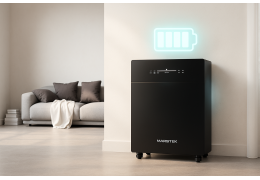
Self-consumption solar kit with modular lithium storage
💡Flagship product: Sofar Solar BTS 5K lithium battery (5.12 kWh)
Modular solution expandable up to 20 kWh, 6000 cycles, compatible with major hybrid inverters (Sofar, Deye, WKS, Huawei). Plug-and-play installation, 10-year warranty.
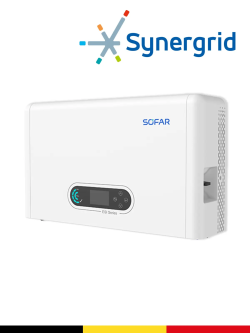
Thehybrid inverter is the brain of your modern solar installation. Unlike a conventional PV inverter (which simply feeds solar energy into the grid or supplies power to the house), the hybrid inverter intelligently manages three simultaneous flows:
The advanced modes of modern inverters (Sofar ESI, Deye, WKS EVO) allow in particular:
✅ Self-consumption - ✅ Emergency back-up - ✅ Off-peak hours - ✅ Tariff arbitration - ✅ Zero injection
An emerging but promising technology could revolutionise domestic energy flexibility: Vehicle-to-Grid (V2G). How does it work? Use the colossal battery of your electric vehicle as a storage system for your home.
Concrete example of V2G usage:
Typical scenario: teleworking day
Find out more about this technology: 🔗 EV & V2G batteries: full guide
ORES has presented an investment plan structured around 3 major axes to modernise and strengthen the Walloon network :
The major problem? These massive investments will take years to materialise (studies, authorisations, worksites), require colossal budgets that will inevitably be reflected in electricity bills, and do absolutely nothing to prevent the current saturation point.
The article in L'Avenir on 10 December 2025 confirms this unambiguously: "ORES's investment plan needs to be revised upwards, which could mean a further increase in electricity bills".
To put it plainly: the network will not be up to standard before 2030-2035 at the earliest, at a time when massive electrification (CAP, EVs, industry) is already here and accelerating. The period 2025-2032 will be critical, with growing tensions between explosive demand and limited supply. Individual solutions (storage, flexibility, hybridisation) are not optional: they are imperative if we want to maintain comfort and energy resilience.
Configuration: Heat pump alone for heating + EV + possibly PV without batteries
Advantages:
Major disadvantages:
Conclusion: Consistent only in very robust areas (Group 4 ORES substations), risky elsewhere. Not recommended by Wattuneed except in very specific cases.
Configuration: heat pump + EV + sized PV installation + 10-20 kWh lithium battery + hybrid inverter + home automation control system
Disadvantages:
Conclusion: Excellent compromise if budget available and desire to remain 100% electric. Solution of the future recommended by Wattuneed for new buildings or heavy renovations.
Configuration: main heat pump + gas/oil boiler/woodstove as back-up + possibly PV + battery + automatic switchover control.
Conclusion: the most realistic and pragmatic scenario in a Wallonia where reliable access to electrical power is becoming problematic. Strongly recommended by Wattuneed for renovations where a functional boiler exists, or for areas identified as fragile (Group 1-2 ORES stations).
1. Thou shalt favour storage
2. Hybrid system to be considered
3. Flexible tariffs intelligently adopted
4. Anticipate V2G
5. Dimension your PV installation realistically
6. Check the state of the local grid
7. Thou shalt seek professional support
Use our free calculation tools: PV sizers, battery calculators, self-consumption simulators, etc.
If we want an energy transition that works every day, in all weathers, including during cold snaps and evening peaks, we absolutely must get away from the simplistic slogan "PV + CAP = universal solution".
ORES explicitly and unambiguously documents:
The CWaPE, for its part, is clearly gearing tariff rules and regulations towards :
The electrification of heating and transport is an ecological necessity - no one at Wattuneed disputes this. But it must imperatively be accompanied by :
"Abandoning a functional fossil heating system to install an all-electric heat pump with no storage, no control and no back-up is, in the current state of the Belgian network documented by ORES and CWaPE, a high-risk decision. Saving 200 litres of heating oil in winter only to find yourself without heating in the event of network undervoltage, local saturation or a breakdown is not environmentally friendly: it's energy recklessness." - Wattuneed SPRL
At Wattuneed, we believe in a pragmatic, resilient and functional energy transition. Our solutions combine :
Because a house without heating in the middle of winter is not environmentally friendly. Because true ecology is one that works every day, in all weathers, without jeopardising the comfort and safety of the inhabitants.
Flexibility, storage and hybridisation: the three pillars of a smart solar installation in 2025-2030
Yes, but not on their own. A correctly sized heat pump, combined with a storage battery (10-15 kWh minimum), an intelligent hybrid inverter and ideally a back-up system (wood, gas, oil), is still an excellent solution. The important thing is not to be 100% dependent on the electricity grid at peak times (5pm-10pm) and during periods of potential undervoltage. ORES explicitly documents the risks of the heat pump not starting up at 200V.
Sizing according to profile:
Favour modular systems (Sofar BTS, Pylontech US5000, Delong) that can be expanded as needs change.
No, but bi-hourly tariffs are. The CWaPE clearly states:
Interesting if installation with battery + home automation (automatic optimisation). Otherwise, conventional two-hourly pricing is sufficient without major penalty (but full/expensive price differential to be anticipated).
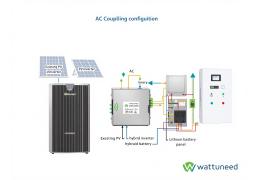
No, but it can be improved. It is still useful for reducing bills (instantaneous self-consumption + paid injection according to contract). To maximise resilience and self-consumption (70-90%), the addition of a battery via AC Coupling is strongly recommended. Wattuneed offers retrofit solutions for adding :
See guide: AC Coupling: 6 possible configurations
The term "crack" is excessive, but the constraints will be very real and measurable. ORES documents this in black and white:
Expected consequences 2025-2032:
Network investment will take at least 10-15 years. Critical period 2025-2032 → individual resilient solutions imperative.
Yes, as part of an overall system approach. Several angles:
Wattuneed conclusion: Intelligent hybrid (heat pump 80-90% + back-up 10-20%) often more environmentally friendly overall than dogmatic 100% electrification in a fragile grid context.
Concrete actions:
Indirect indicators:
Official information: ORES does not publish a detailed public map of saturated substations (commercial confidentiality), but occasional information via :
Yes, we offer a complete package:
📞 Need personalised advice for your project?Wattuneed helpdesk - PV technical blog - Free toolbox
Wattuneed SPRL - Your Belgian partner for photovoltaic and renewable energy solutions since 2010. Technical expertise, personalised support, resilient solutions adapted to the Belgian grid.🌐 www.wattuneed.com | 📧 Customer support & SAV | 📚 Blog & technical guides | 🧰 Sizers & calculators
check_circle
This store asks you to accept cookies for performance, social media and advertising purposes. Social media and advertising cookies of third parties are used to offer you social media functionalities and personalized ads. Do you accept these cookies and the processing of personal data involved?