Since 2008
Based in Belgium and France
+ 60 000 clients
Our blog
A.S.S.
Shopping Cart
ORES rejects 27 high-voltage substations and warns of 10,000 vulnerable circuits. The much-vaunted PV + heat pump duo...
Maîtrisez l'application SOLARMAN Smart pour piloter et surveiller votre onduleur depuis votre smartphone ou PC en...
Guide expert pour le démarrage automatique de groupe électrogène (AGS). Comparatif des configurations sur Victron...
Systèmes all-in-one (Zendure, EcoFlow, Bluetti, Marstek) vs modulaires (Deye, Victron + Pylontech) : comparatif...
Guide complet sur les disjoncteurs électriques : calibre, courbes B/C/D, sections de câbles, dimensionnement AC/DC...
The Belgian energy landscape is undergoing a major transformation with the arrival of new tariffs that will take full effect in 2026. For owners of photovoltaic panels installed after January 1, 2024, these changes will radically alter the profitability of their investment. Faced with this new situation, battery storage is emerging as the most effective solution for preserving and even increasing the profitability of your solar installation.
In this article, we take a detailed look at the mechanisms behind the new tariffs, and show why adding a storage battery is now an essential strategic choice for optimizing your self-consumption and significantly reducing your electricity bill.
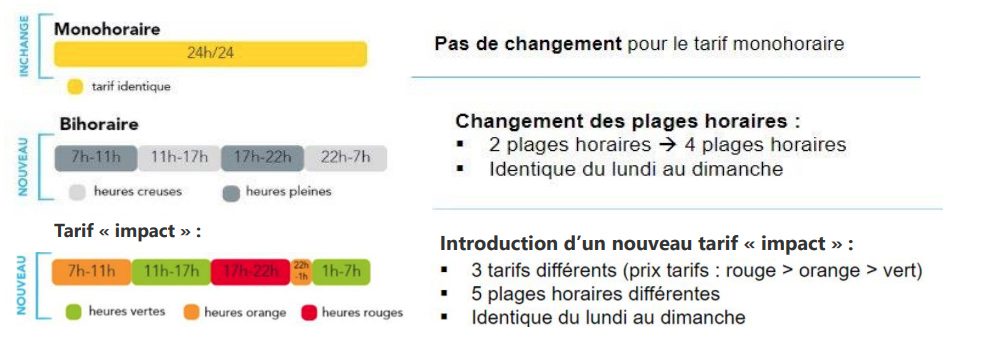
The new tariff mechanisms that will come into full effect in 2026 are designed to more accurately reflect the real costs of the grid and encourage smarter electricity consumption. Three major changes will have a direct impact on owners of photovoltaic panels:
For photovoltaic installations delivered after January 1, 2024, the principle of the "meter that turns upside down" has been definitively abandoned. In practical terms, this means that the electricity you inject into the grid and the electricity you draw from it are now accounted for separately, at very different rates.
The direct consequence of this change is that the electricity you produce but don't immediately consume yourself will be sold at a much lower price than that at which you buy electricity from the grid. On average, you'll sell your surplus for around €0.05/kWh, whereas you'll pay around €0.30/kWh for electricity drawn from the grid. This difference of 1 to 6 makes self-consumption much more advantageous than injecting electricity into the grid.
The new tariffs also include a dynamic component that varies the price of electricity according to :
These variations in tariffs particularly penalize households that consume mainly in the evening, when solar production is low or non-existent but tariffs are high.
The capacity component of your bill, based on the maximum power you draw from the grid, will increase considerably. This tariff, also known as the "prosumer tariff" or "peak power network tariff" in Flanders, is designed to reflect the cost of using the electricity network.
In concrete terms, each consumption peak will be billed more heavily, encouraging smoother consumption throughout the day. This change particularly penalizes households which, in the absence of batteries, have to draw a lot of electricity from the grid in the evening, creating costly consumption peaks.
"The new 2026 tariffs represent a paradigm shift for photovoltaic panel owners. Self-consumption becomes the key profitability factor, and the storage battery the most efficient way to optimize it."
Faced with these tariff changes, the storage battery is no longer a simple convenience accessory, but becomes a central element in the profitability of your photovoltaic installation.
Without a battery, a conventional photovoltaic system can only consume 30 to 40% of the electricity produced. The rest is fed into the grid at low cost. With a well-sized battery, you can increase this self-consumption rate to 70-85%, or even more.
The battery enables you to store the electricity produced during the day for use in the evening and at night, precisely when your panels are no longer producing but your consumption is high.
For a typical 5 kWp photovoltaic installation in Belgium producing around 4,500 kWh per year, this represents an additional annual saving of up to €500 to €800 thanks to increased self-consumption alone.
An intelligent battery, combined with a high-performance hybrid inverter, can detect your consumption peaks and automatically discharge the battery to compensate, thus avoiding drawing too much power from the grid at the same time.
By smoothing your consumption thanks to the battery, you significantly reduce the peaks you draw from the grid. With the new capacity tariff, this benefit translates directly into savings on your electricity bill.
An average household can save between €150 and €300 a year on the capacity component of its bill alone.
Modern batteries, equipped with intelligent management systems, can be programmed to charge when electricity is cheaper and discharge during periods of high tariffs.
This feature, known as "tariff arbitrage", allows you to further optimize your energy bill by taking advantage of price variations throughout the day. Over a full year, this optimization can represent additional savings of €100 to €200.
Beyond the financial savings, battery storage gives you greater independence from fluctuating electricity prices and potential grid failures. Some systems even enable you to continue powering your essential appliances in the event of a power cut, like the Pylontech US5000 battery, which offers a built-in backup mode.
Would you like to find the right battery for your system? Take a look at our complete range of storage solutions or request a customized quote.
Let's take a look at the concrete profitability of a storage battery installation in the context of the new 2026 tariffs.
The price of a high-performance lithium battery system starts at around €2,500 for 5 kWh, including installation. For an average family, a requirement of 7 to 10 kWh is common, bringing the initial investment to between 3500€ and 5000€.
At Wattuneed, we offer quality solutions such as the Pylontech US5000 or the Pylontech Rack 10 kWh, which offer excellent value for money and exceptional durability.
With the new tariffs, a well-sized battery can save you money on a number of fronts:
Assuming average annual savings of €1,000 and an investment of €4,500, the ROI is around 4.5 years. Even with more conservative estimates, ROI is generally between 6 and 8 years.
As modern lithium batteries have a lifespan of 10 to 15 years (or 6,000 to 10,000 charge/discharge cycles), you'll enjoy several years of net savings after you've amortized your investment.
What's more, with electricity rates set to rise in the coming years, this payback time could be even shorter.
"We installed a storage battery 6 months ago and our electricity bill has been cut by over 70%. With the new tariffs coming in, it's really the best decision we've made for our photovoltaic installation." - The Haccour family, Liège
After receiving their photovoltaic system in early 2024, the Haccour family saw their annual bill drop from 1420€/year (without battery) to 610€/year thanks to a Pylontech US5000 battery.
Their self-consumption rate has risen from 38% to 79%, making their investment profitable in less than 7 years, despite the new tariffs. The battery also enables them to intelligently manage their consumption during peak periods, significantly reducing the impact of the capacity tariff on their bill.
"We chose Wattuneed for their tailor-made support. The battery proved to be a winning choice in the face of the end of the prosumer tariff." - Mr. Haccour
The storage battery market has evolved considerably in recent years, offering today more efficient, more durable and more intelligent solutions. Here are the essential criteria to consider when making the right choice:
Capacity must be adapted to your consumption and the power of your photovoltaic system. For an average household, a capacity of 5 to 10 kWh is generally recommended.
At Wattuneed, we offer modular solutions such as Pylontech batteries, which enable you to gradually increase capacity as your needs change.
This parameter determines the amount of energy your battery can deliver instantaneously. To comfortably power a house, a minimum power of 3 kW is recommended.
Modern lithium batteries generally offer between 6,000 and 10,000 charge/discharge cycles. Choose models with a warranty of at least 10 years or 6000 cycles to ensure a good return on investment.
With the new dynamic tariffs, an intelligent management system becomes essential to optimize energy flows according to current tariffs. Batteries equipped with an advanced BMS (Battery Management System) can maximize your savings.
For example, our energy management solutions offer advanced features that integrate perfectly with your storage battery.
Need personal advice? Request a free quote or contact our experts on +32 87 45 00 34.
Adding a battery to an existing photovoltaic system requires a number of important technical considerations.
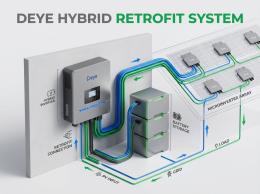
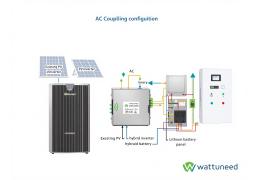
If you already have a photovoltaic system, there are several options open to you:
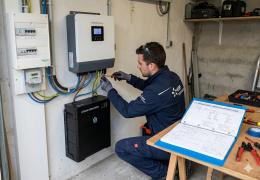
Our technicians can assess your current installation and recommend the most suitable and cost-effective solution.
Modern batteries are compact, but require a suitable location: protected from humidity, in a ventilated space with moderate temperatures. A wall surface of 1m² and a floor space of 0.5m² are generally sufficient for a standard domestic installation.
check_circle
This store asks you to accept cookies for performance, social media and advertising purposes. Social media and advertising cookies of third parties are used to offer you social media functionalities and personalized ads. Do you accept these cookies and the processing of personal data involved?