Mounting systems

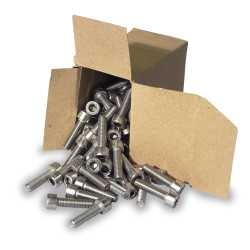
The mounting system is the life insurance of your solar installation: whether on tiles, slates, flat roofs or on the ground, the rule is simple: the fixing must not move. Our structures (aluminium/stainless steel) are designed to withstand wind and snow loads, while ensuringthe waterproofing of your roof.

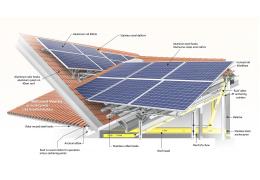
For pitched roofs, choose adjustable hooks and lag screws fixed to the roof structure to avoid any stress on the tiles. On flat roofs (bitumen, EPDM, gravel), opt for aerodynamic structures that work by ballasting (without drilling) and improve rear ventilation of the panels.

Good fastening goes hand in hand with good cabling: check your distances and sections to limit losses. See also our

Choose in 30 seconds

  • My support: tiles / slates / steel roofing / flat roof / ground / balcony.
  • Sloping roof: hooks + adjustable lag screws, fixed to the roof structure to maintain watertightness.
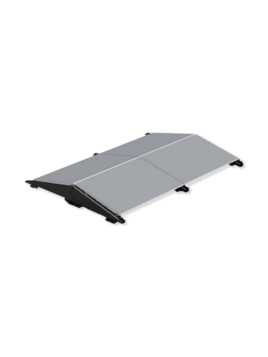
  • Flat roof: weighted aerodynamic structure (no drilling) and good rear ventilation.
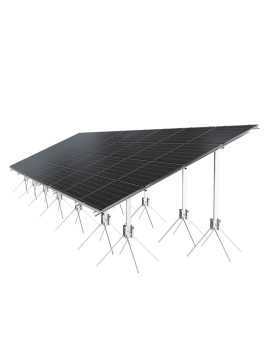
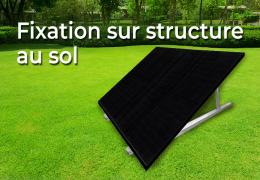
  • On the ground: kit adapted to the size of the panels and orientation (portrait/landscape).
  • Don't forget: suitable cabling and cross-sections → see cables & connectors.

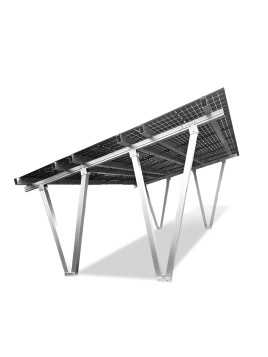
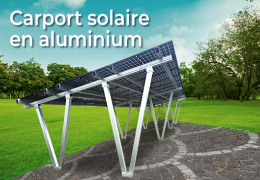
Double photovoltaic carport

Price $5,799.9


FAQ - Mounting systems

1. Which mounting system should I choose for my roof? +
Choose based on the surface: tiles, slate, steel deck, flat roof (ballasted) or ground mount. The goal is stability (wind/snow) and watertightness.
2. Why avoid drilling a flat roof? +
On flat roofs, ballasted structures avoid drilling and reduce leak risks, while remaining stable thanks to aerodynamic design.
3. How can I ensure watertightness on a pitched roof? +
By anchoring into the roof structure with suitable hooks/coach screws, without stressing the tiles, to limit leak risks over time.
4. What should I check for a ground-mount installation? +
Check compatibility with panel dimensions, orientation (portrait/landscape) and the mechanical strength of the whole structure.
5. Why is cabling linked to the mounting system? +
The structure sets cable distances: you must check lengths and cross-sections to limit losses. See cables & connectors.

The revolution of N-Type ABC and TOPCon cells

The photovoltaic market is undergoing a profound transformation with the progressive shift from P-Type cells to N-Type architectures. At Wattuneed, we integrate the latest innovations such as TOPCon (Tunnel Oxide Passivated Contact) and ABC (All Back Contact) to offer our customers energy productivity that exceeds conventional standards.

TOPCon N-Type: The new standard for high efficiency

TOPCon technology is establishing itself as the natural successor to PERC. By adding an ultra-thin oxide layer, it drastically reduces electron recombination losses. The result: a cell efficiency exceeding 25% and, above all, an improved temperature coefficient. This means your panels lose less power during hot days, a crucial advantage for rooftop installations where ventilation is limited.


ABC (All Back Contact): Aesthetics at the service of performance

ABC technology represents the pinnacle of current solar engineering. Unlike classic panels, all electrical contacts are placed at the rear of the cell.

  • Zero shading: The front side is 100% dedicated to photon capture, increasing the active surface area.
  • Premium Full Black Design: Without visible metal grids (busbars), the panel offers a deep and uniform black, ideal for demanding architectural projects.
  • Increased durability: The ABC structure is inherently more resistant to micro-cracks caused by temperature variations.

Bifaciality and yield in low light conditions

The use of N-Type substrates allows for a much better spectral response. Our panels capture light more effectively at dawn, dusk, or in overcast weather. Coupled with a bifacial structure, this technology allows for the recovery of albedo (ground reflection), increasing energy gain by up to 20% depending on the type of surface (white gravel, light membranes, or ground mounting).

By choosing these technologies at Wattuneed, you are investing in equipment with low degradation (less than 0.4% per year), ensuring maximum profitability for over 30 years.

Loading...