Categories
Voltage
Technology
Brand
Price
Solar battery
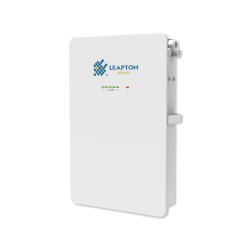
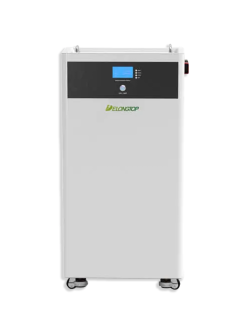
Our solar batteries store the electricity produced by your panels so you can use it later: self-consumption, backup or off-grid site. Discover lithium (LiFePO4) solutions, Plug & Play batteries (Marstek, Zendure), AGM / GEL ranges, and tubular OPzS / OPzV batteries for demanding installations, with compatible accessories. To choose the right technology and compare the price per usable kWh, check our battery comparison, then estimate your return on investment with the storage profitability calculator.
Choose in 30 seconds
- Self-consumption (daily use): opt for a LiFePO4 lithium battery (many cycles).
- Emergency/backup: check compatibility with your hybrid inverter and power cut management.
- Off-grid site: size in useful kWh and check the voltage (12/24/48V or high voltage depending on the system).
- Budget: compare the price per useful kWh and calculate the payback period before purchasing.


Marstek Venus-E-GEN-3.0 lithium battery - 51.2...
- On sale!
- -€227.99






Related posts





Solar batteries: complete guide to choosing the right storage
Adding a battery to your solar installation is the step that really changes the game: you no longer depend only on real-time sunshine, you store the energy produced at midday to use it in the evening, at night, or during a grid outage. But not all batteries are equal—technology, capacity, voltage, inverter compatibility… here’s what you need to know before buying.
The different solar battery technologies
LiFePO4 lithium batteries (Lithium Iron Phosphate)
Today, this is the benchmark for residential and semi-industrial storage. LiFePO4 chemistry offers several decisive advantages over other technologies:
- Exceptional lifespan: between 4,000 and 6,000 cycles depending on the models, i.e., 10 to 15 years of daily use.
- High safety: no risk of thermal runaway, unlike NMC or NCA chemistries.
- Depth of discharge: usable at 80–90% of nominal capacity, versus 50% max for an AGM battery.
- Low self-discharge: ideal for seasonal use (cabin, camper van).
- Modularity: brands such as Pylontech, BYD or Dyness offer stackable modules to scale your capacity without changing everything.
AGM and GEL batteries
An older technology, but still relevant in some cases. Cheaper to buy, they have a shorter lifespan (500 to 1,200 cycles) and a limited depth of discharge. They remain a valid option for small 12V/24V systems with moderate use, or to replace a battery at lower cost in an existing installation.
OPzS and OPzV batteries
These tubular batteries with liquid electrolyte (OPzS) or gelled electrolyte (OPzV) are designed for industrial installations, off-grid sites with high autonomy, or battery banks. They tolerate repeated deep cycles over 15 to 20 years. A professional choice for projects that require robustness and maximum service life.
Plug & Play batteries
A new generation of ready-to-use indoor batteries (Marstek, Zendure…), designed to pair easily with a Plug & Play solar kit or a compatible hybrid inverter. Ideal to start storing energy without complex installation work.
How to size your solar battery?
Battery sizing depends on 3 parameters:
- Nighttime consumption (kWh): what you use between sunset and the next morning. For a typical home, this is often between 3 and 6 kWh/night.
- Allowable depth of discharge: a 10 kWh lithium battery usable at 90% actually gives you 9 kWh usable. A 10 kWh AGM limited to 50% gives you only 5 kWh usable—always think in usable kWh, not nominal.
- System voltage: 12V or 24V for small off-grid systems, 48V for most residential hybrid inverters, high voltage (100V+) for some premium inverters.
To calculate the exact capacity you need, use our battery sizing tool. It takes your PV production and your real consumption into account.
Solar battery and hybrid inverter: compatibility above all
A battery does not connect to just any inverter. Before buying, always check:
- The battery voltage is compatible with your inverter’s battery input range.
- The battery communicates properly with the inverter via the appropriate BMS protocol (CAN bus, RS485…). Without BMS communication, the inverter cannot manage charge/discharge optimally.
- The battery’s charge/discharge power is consistent with your inverter’s power.
See our hybrid inverter category to find the combinations tested and validated by our team.