Brand
Number of MPPT
Phase
Inverter power in VA
Price
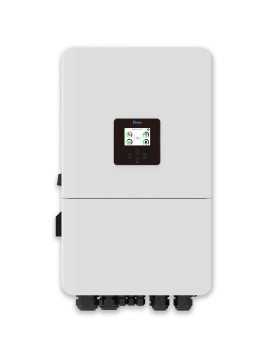
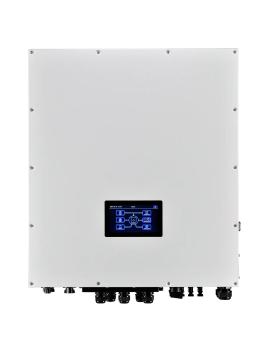
Hybrid inverters
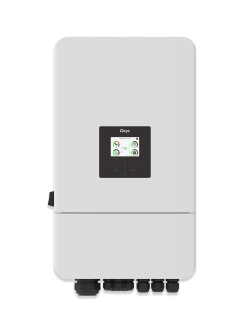
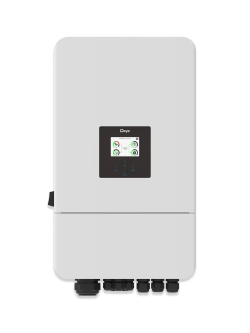
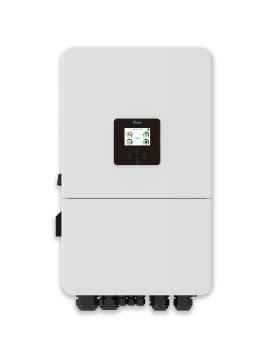
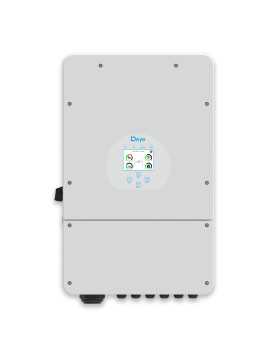
A hybrid inverter simultaneously controls your photovoltaic panels, your lithium battery and the grid. It enables self-consumption with storage, backup mode during a power cut, and grid injection (or zero export).
Wattuneed offers more than 50 models from 3 to 60 kVA, single-phase and three-phase, from Deye, Sofar, WKS Voltronic, Huawei and Victron.
⚡ Choose your hybrid inverter in 30 seconds
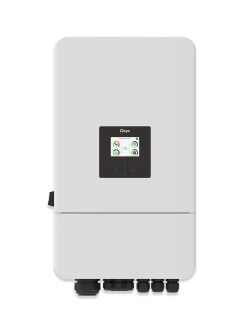
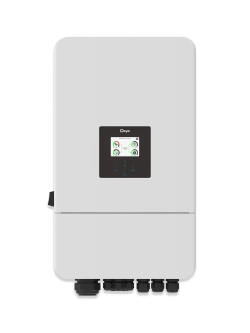
- ≤ 6 kWp single-phase Deye SUN-5K-SG05LP1-EU or WKS Circle Pro
- 6-12 kWp single-phase Deye SUN-8K/12K-SG05LP3-EU or WKS Evo 10.2 kVA
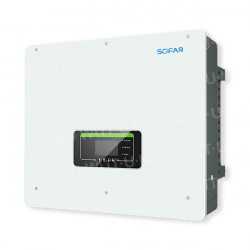
- 10-20 kWp three-phase Deye SUN-12K/20K-SG01HP3-EU-AM2 or Sofar HYD 20KTL-3PH
- 25-60 kVA three-phase Deye SUN-25K/30K/50K HP3 or WKS Pro 60 kVA
- AC coupling Deye SUN-5K/8K/12K-SG01LP1 (compatible with 3rd-party inverters)
📊 Comparison of the 5 brands
Hybrid inverters distributed by Wattuneed — 2026 manufacturer data
| Brand | Range | 1ph/3ph | Compatible batteries | AC coupling | Warranty | Strengths |
|---|---|---|---|---|---|---|
| Deye ⭐ Bestseller | 3 — 50 kVA | 1ph + 3ph | Pylontech, BYD, Dyness, Wattuneed | ✓ Yes (LP1) | 5+5 yrs | Versatile, backup < 10 ms |
| Sofar Solar | 3 — 20 kVA | 1ph + 3ph | Pylontech, BYD, Sofar BTS | ✓ Yes (HYD-EP) | 5 yrs (ext. 10/15) | ESI + BTS 5K, all-in-one with clean design, easy install |
| WKS Voltronic | 3 — 60 kVA | 1ph + parallel 3ph | Pylontech US/Force, Wattuneed | — off-grid | 2 yrs (ext. 5) | Off-grid, parallelable ×9 |
| Huawei | 3 — 20 kVA | 1ph + 3ph | Huawei LUNA | Limited | 10 yrs | All-in-one LUNA, hassle-free, FusionSolar monitoring |
| Victron Energy | 0.8 — 15 kVA | 1ph + 3ph (Quattro) | Pylontech, BYD, Victron | ✓ Yes (MultiPlus II) | 5 yrs | Off-grid, marine, custom VRM integration |
🏠 Single-phase (230 V)
Single-family homes ≤ 12 kWp typically. Easier and cheaper to install.
Popular models: Deye SUN-5/6/8/10/12K-SG05LP1, Sofar HYD 5/6/8KTL-EP, WKS Evo 5.6/7.2/10.2 kVA.
🏢 Three-phase (400 V)
Required for 3-phase meters (most common above 9 kWp BE, 6 kWp FR). Better load distribution across 3 phases.
Popular models: Deye SUN-12/15/20K-SG01HP3, Sofar HYD 10/15/20KTL-3PH, Deye SUN-25/30/50K-HP3.
🔌 AC coupling: adding a battery to an existing installation
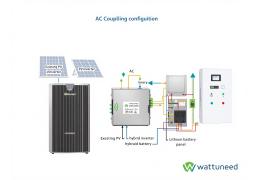
If you already have a working classic (string) PV inverter, you can add a battery via a hybrid inverter in AC coupling mode. The hybrid plugs in on the AC side and only manages the battery + backup; your panels keep producing through your original inverter.
Slightly lower efficiency than DC coupling (~5% loss due to double conversion)
AC coupling models at Wattuneed: Deye SUN-5K/8K/12K-SG01LP1-AC, Victron MultiPlus II. → Complete AC coupling guide (6 configurations)
🔋 Compatibility with lithium batteries
All our hybrid inverters are compatible with lithium-iron-phosphate (LiFePO4) batteries at 48 V. The most popular pairings in 2025:
Most common pairing in BE/FR. CAN bus, plug-and-play.
High voltage (up to 512 V), for systems > 15 kWp.
Beautifully designed all-in-one combo, plug-and-play install, Solarman monitoring.
Parallel configuration up to 16 batteries.
High voltage, stackable design.
→ Our inverter ↔ battery compatibility checker lists pairings validated in our workshop (93 product groups, 172 rules).
⚡ Backup mode: surviving a power cut
A key advantage of hybrid inverters: automatic switchover to battery during a grid outage, in less than 10 ms (Deye, Sofar) or 20 ms (WKS, Victron). Essentials — fridge, freezer, internet box, lighting — stay powered.
Separate EPS terminal — Deye, Sofar HYD-EP, Victron
Whole house powered via ATS contactor — Deye SG01HP3
Restart from battery without grid (long blackouts)
📈 Zero export, peak shaving, max self-consumption
Modern hybrid inverters support multiple advanced control modes:
- Maximum self-consumption — battery absorbs solar surplus before grid injection (default mode)
- Zero export (anti-injection) — inverter throttles output to never inject (zones where injection is forbidden or unpaid)
- Peak shaving — smooths industrial demand peaks via battery (cuts SME peak charges)
- Time-of-use (night charging) — charge from grid during off-peak, discharge during peak hours
❓ FAQ — Hybrid inverters 2026
Which is the best hybrid inverter in 2026?
No universal "best". For homes < 12 kWp, Deye SG05LP1 leads on value. For 3-phase SME, Deye HP3 or Sofar HYD-3PH. For pure off-grid, WKS Voltronic. For hassle-free all-in-one, Sofar ESI + BTS 5K or Huawei LUNA. For custom premium integration, Victron. Our technical team advises on your quote.
What's the difference between a hybrid and a classic inverter?
A classic (string) inverter only converts panel production into usable electricity. A hybrid inverter adds battery management (charge/discharge), a backup mode during outages, and self-consumption / injection control.
Can I add a battery to an existing solar installation?
Yes, via a hybrid inverter in AC coupling mode (Deye SUN-LP1-AC, Victron MultiPlus II). Your panels and original inverter stay in place; the hybrid plugs in on AC and manages battery + backup. → AC coupling guide.
What inverter capacity should I choose?
Rule of thumb: AC inverter power ≈ peak PV power × 0.9 to 1.0. 6 kWp panels → 5-6 kVA hybrid. 10 kWp → 8-10 kVA. Oversizing (1.2×) is useful if you plan to expand the array or add an EV charger.
How much does an installed hybrid inverter cost?
Excl. install: €800 Deye 5K mono, €1,500-1,800 Deye 12K 3-phase, €2,500-3,500 20 kVA 3-phase premium. Certified install: €600-1,200 depending on complexity. → Free PV study.
Hybrid inverter: single-phase or three-phase?
If your meter is single-phase, choose a single-phase hybrid (max ~12 kVA). If three-phase, you can take either, but 3-phase distributes load better and is required above 9 kWp in BE, 6 kWp in FR.
How long does a hybrid inverter last?
Technical lifespan: 12-15 years. Manufacturer warranty: 5 years (Deye, Sofar, Victron, WKS) to 10 years (Huawei, Sofar with extension). Fans and capacitors are wear parts that may need service after 8-10 years.
Can I parallel two hybrid inverters?
Yes on certain models: WKS Voltronic up to 9 units, Deye 6-9 units depending on reference (SG05LP1 → 6, HP3 → 9), Sofar limited to 6. Allows scaling to 60-90 kVA on industrial sites.
Do I need a permit to install a hybrid inverter?
In Belgium, declaration to the DSO (Sibelga, ORES, RESA, AIEG) is mandatory for any grid-injecting installation. In France, prior declaration (DP) at the town hall + Consuel + Enedis connection. Wattuneed handles the technical part of the file as a certified vendor.
Does a hybrid inverter work without a battery?
Yes: all our models work in pure "PV grid-tie" mode with no battery connected. You can add the battery 6 months or 2 years later without changing the inverter. That's the key advantage of hybrid over classic grid-tie.
🏷 Browse our hybrid inverters by brand
🤝 Need help choosing?
Our technical team sizes your installation for free.
📐 Free study 📞 Talk to an expert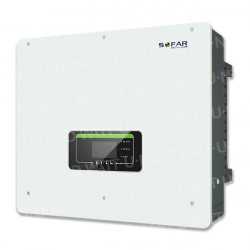


















Related posts