Brand
Inverter type
Phase
Number of MPPT
Inverter power in VA
Price
230V Inverters
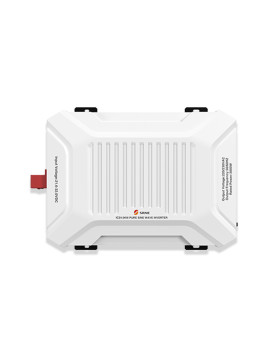
A 230V converter (DC/AC inverter) transforms the direct current (DC) from your batteries or autonomous solar system into 220–230V alternating current to power your standard appliances. Two technologies available: modified sine, more affordable for simple uses, and pure sine, which delivers grid-quality power — essential for computers, motors and sensitive equipment. Available from trusted brands including Victron Energy and Studer for motorhome, boat, campervan and off-grid installations.
Choose in 30 seconds
- Pure sine or modified sine: choose pure sine for any sensitive device (computer, charger, motor, pump, medical equipment). Modified sine may work for simple lighting and heating elements on a tight budget.
- Input voltage: match your battery bank — 12V for small mobile setups (motorhome, boat), 24V for mid-range power, 48V for residential off-grid systems.
- Power (VA or W): add up all simultaneously connected appliances + 20% margin. Motors and compressors need 2–3× their rated power at start-up.
- Your use case: motorhome / van → compact 12V or 24V. Boat → marine-certified pure sine. Off-grid home → high-power 48V with automatic transfer.
- Brand and reliability: for daily or intensive use, choose trusted brands like Victron Energy or Studer — build quality and after-sales support make all the difference.







Related posts

FAQ - 230V inverters (DC/AC converters)
230V converter: complete guide to choosing the right DC/AC inverter
A 230V converter — also called a DC/AC inverter — lets you run standard 230V AC appliances from a DC power source: motorhome battery, solar battery bank, boat battery or off-grid storage system. It is the essential link between your energy storage and your power sockets.
Pure sine vs modified sine: what's the real difference?
- Pure sine: produces a perfect sinusoidal wave, identical to grid power. Compatible with all appliances — computers, phone chargers, medical devices, induction motors, pumps, compressors, hi-fi equipment. The recommended choice in virtually every case.
- Modified sine: produces a stepped wave approximating a sine. Cheaper to buy, but incompatible with many modern devices: switching-mode chargers, variable-speed drives, high-end audio, medical equipment. Can cause overheating, noise or malfunction. Only suitable for very simple uses (lighting, heating elements) on a very tight budget.
Wattuneed tip: the price gap between the two technologies has narrowed significantly. Unless your budget is extremely tight, always go pure sine — it avoids unpleasant surprises.
Choosing the right input voltage: 12V, 24V or 48V?
- 12V: the standard for leisure vehicles (motorhomes, campervans, boats). Practical for low power (up to ~2,000W), but cables must be very short and thick to avoid losses. Above 1,000W in 12V, currents become very high (80A+).
- 24V: a good compromise for mid-range power (1,000 to 3,000W). Less common in vehicles but widely used in fixed semi-professional installations.
- 48V: the reference for residential off-grid installations. Half the current of 24V for the same power — easier cabling, less losses, better overall efficiency.
Calculating the power you need
- Continuous vs peak power: converters specify two values — continuous power (permanent output) and peak power (start-up surge, a few seconds). Always size on continuous power.
- Motor start-up current: electric motors (pumps, compressors, fridges) can demand 2–5× their rated power at start-up. Check the supported peak power before buying.
Typical use cases and recommended ranges
Motorhome, campervan and converted van
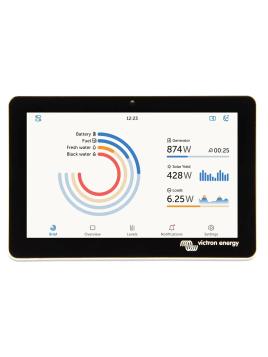
The most common use. 12V for most installations, 24V for vans with many appliances. Victron Energy Phoenix inverters are the benchmark: robust, quiet, and compatible with the full Victron ecosystem (Bluetooth control, Cerbo GX monitoring).
Boat and marine use
The marine environment is particularly harsh (humidity, vibration, salt). Choose a converter with marine certification or designed for harsh environments. Pure sine is mandatory to protect navigation electronics.
Off-grid site and off-network chalet
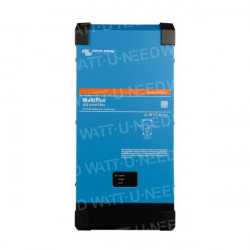
For full residential comfort (fridge, washing machine, oven...), you need a high-power 48V converter with automatic transfer. Victron Multiplus and Studer XTH inverter-chargers combine converter, battery charger and automatic transfer in one unit.
Home backup and emergency power
To keep critical devices running (router, lighting, phone) during a power cut. A 12V or 24V converter with an AGM or lithium battery can provide a few hours of autonomy on the essentials. See our backup kits for ready-to-use solutions.
Brands available at Wattuneed
Victron Energy
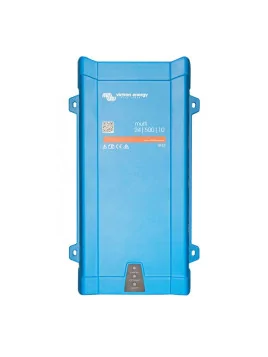
The world reference for quality DC/AC converters. The Phoenix range (pure sine, 250VA to 5,000VA) covers all mobile and fixed uses. Multiplus and Quattro add an integrated battery charger and automatic transfer. Find the full range in our Victron Energy category.
Studer
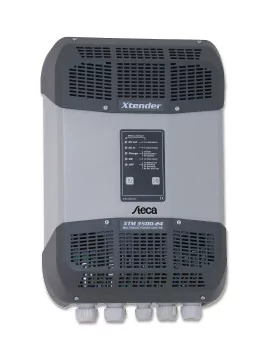
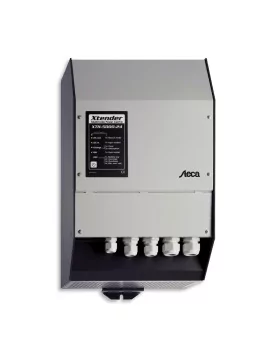
Swiss premium manufacturer, Studer is the reference for demanding installations and professional off-grid sites. Their XTH, XTS and Xtender inverter-chargers are built for exceptional longevity and harsh environments.