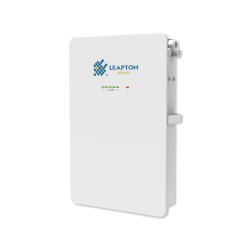
List of products by brand Leapton Solar
Leapton Energy, headquartered in Japan and one of the world leaders in the photovoltaic industry, specializes in the manufacture of high-quality Tier 1 solar modules. Today, Leapton Energy products are available in over 50 countries and regions. With over 10 years of development in the solar energy field, Leapton Energy has built a solar module manufacturing base, Leapton Solar (Changshu) Co.,Ltd. in Jiangsu, China.
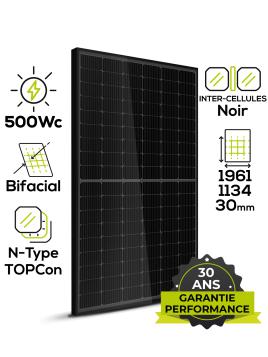
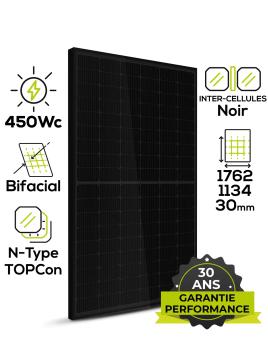
Leapton Energy produces high-quality solar modules with a 25-year product warranty, a 25-year power warranty for standard modules, and a 30-year power warranty for bifacial and N-type modules. Leapton can supply the right modules for every solar system.
LEAPTON ENERGY CO.,LTD was founded in Kobe, Japan, in 2012. It focuses not only on R&D and sales of solar power systems, solar modules, mounting systems and ground screws in Japan, but also on the development, management and after-sales maintenance of solar power plants. We have built over 60 solar power plants across Japan using our own resources. In 2015, a branch was established in Tokyo, focusing on the sale of photovoltaic products.
In 2012, Leapton established its Chinese headquarters in Shanghai - LEAPTON ENGINEERING TECHNOLOGY(SHANGHAI) CO.,LTD, which focuses on the development and sale of Chinese photovoltaic systems.
The LEAPTON SOLAR(Changshu) CO.,LTD module factory was established in Changshu, Jiangsu in 2017, and focuses on the production and sale of solar modules worldwide. With the world's most advanced automated production line, the annual module capacity was 600MW in 2020. Products are strictly manufactured in accordance with the Japanese industry standard, which is one of the top ten Japanese module brands and ranked in the Bloomberg Tier1 list for many consecutive years, .In 2019, the project will be divided into two phases, covering a total area of 72,000 m². At the beginning of 2021, the first phase of the 2 GW plant is completed, and Leapton Solar enters the GW era. The second phase of the 3GW plant will be completed in 2023.
Translated with DeepL.com (free version)
Price
€109.50
Regular price
€117.38
FAQ - Pylontech LiFePO4 batteries & solar storage
1. What is a Pylontech battery used for in a photovoltaic system? +
A Pylontech battery stores the solar energy produced during the day so you can use it later (evening/night), increase self-consumption and, depending on the system configuration, provide backup power.
2. What type of lithium battery is Pylontech? +
Pylontech offers LiFePO4 (lithium iron phosphate) batteries, a chemistry known for its stability and durability in energy storage applications.
3. How do I choose the battery capacity (kWh) for Pylontech? +
Capacity depends on your consumption, the loads you want to supply, the autonomy you need, and your solar production. In self-consumption, sizing often aims to cover evening/night usage; off-grid systems are sized for 24/48 hours (or more) depending on constraints.
4. Can I expand my storage by adding Pylontech modules? +
Yes. A key advantage is modularity: you can increase capacity by adding modules, within the manufacturer’s recommendations and the inverter/charger limitations.
5. Is Pylontech compatible with all inverters? +
Compatibility depends on the inverter/charger model and integration requirements: system voltage, communication protocol (CAN / RS485), parameters and commissioning procedure. Always check the compatibility list and recommended settings before installation.
6. CAN or RS485: which communication should I use? +
It depends on the inverter and the chosen wiring/architecture. Some systems prefer CAN for battery data exchange, others use RS485. Follow the compatibility recommendations and commissioning guide.
7. Are Pylontech batteries suitable for off-grid systems? +
Yes, they can be suitable for off-grid use if the overall system is designed for autonomy: PV sizing, battery capacity, inverter power, and a backup strategy (generator, etc.) if needed.
8. Which accessories are useful with Pylontech batteries? +
Depending on your configuration: interconnection cables, mounting racks/supports, communication components and, for some ranges, control modules. These accessories help with integration, cable safety and maintenance.
9. Where can I find a commissioning guide (e.g., US5000)? +
Check our technical resources and installation guides (depending on the model). For example, Wattuneed provides a dedicated guide for installing Pylontech US5000 batteries:
Pylontech US5000 installation guide.