Brand
Number of MPPT
Phase
Inverter power in VA
Hybrid inverters
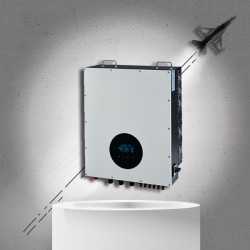
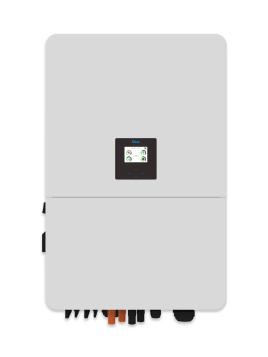
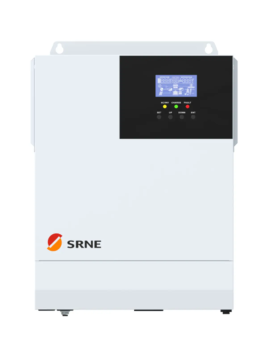
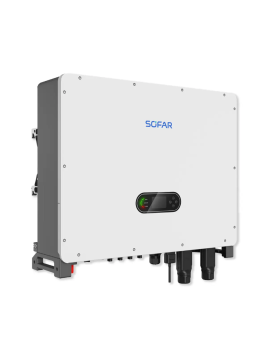
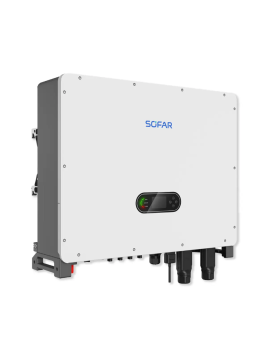
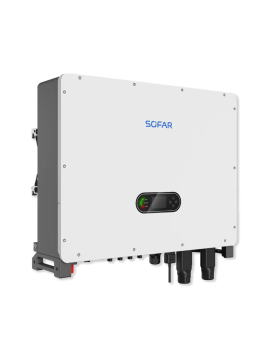
Our hybrid inverters simultaneously manage the production from your solar panels, the charge/discharge of your lithium battery and grid exchanges — all in one device. Available in single-phase and three-phase, from 3 to 60 kVA, with brands including Sofar Solar, Deye, Huawei, WKS and Victron Energy. To understand everything before buying, read our complete hybrid inverter guide.
Choose in 30 seconds
- Single-phase or three-phase: most homes are single-phase. If you have a heat pump or professional use, check your electrical panel — three-phase requires a dedicated inverter.
- Power (kVA): must cover your simultaneous peak consumption. For a standard home with a heat pump: aim for 5 to 10 kVA. For commercial or high-power use: 10 to 30 kVA.
- Number of MPPTs: if you have multiple roof sections or different orientations, choose an inverter with 2 MPPTs or more to optimise each string independently.
- Battery compatibility: check the voltage (48V or high voltage) and BMS protocol (CAN/RS485) before pairing a lithium battery with your inverter.
- Brand and after-sales service: Sofar Solar and Deye offer the best value for money. Huawei and Victron Energy are the premium references with advanced monitoring ecosystems.











Related posts


FAQ - Installations in Luxembourg
Hybrid inverter: everything you need to know to choose the right one
The hybrid inverter is the central component of a modern solar installation with storage. Unlike a standard grid inverter that simply converts panel output into 230V, a hybrid inverter plays three roles: it optimises PV production via its MPPT inputs, manages battery charge/discharge, and controls grid exchanges (injection, draw, zero-export depending on your setup). It decides in real time when to store, when to consume and when to export.
Hybrid inverter vs grid inverter: what's the real difference?
- Grid inverter (string): converts DC from panels to AC 230V, exports to grid or powers the home. No native battery management. Simple and cost-effective if you don't plan on storage.
- Hybrid inverter: does everything a grid inverter does, plus integrated battery management. It can work without a battery initially and accept one later — the ultimate scalable architecture.
- Micro-inverter: one converter per panel, ideal for complex or shaded rooftops. Not designed for direct battery storage.
Wattuneed tip: if you have any doubt about adding a battery in the future, go hybrid from the start. Replacing an inverter two years later costs more than the initial price difference.
Key technical criteria to check before buying
Single-phase or three-phase
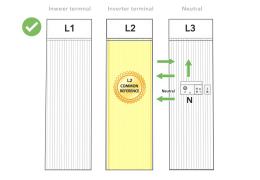
This is the first thing to check on your electrical panel. The vast majority of residential homes in France and Belgium are single-phase (230V, one phase wire). Three-phase (400V, 3 phases) applies to homes with high subscribed power, commercial buildings or large heat pump installations. A single-phase inverter cannot be installed on a three-phase grid — and vice versa.
Power in kVA
The inverter power must cover your simultaneous peak consumption, not just your average. Practical benchmarks:
- Standard home without heat pump: 3 to 5 kVA is sufficient in most cases.
- Home with heat pump, oven, washing machine and EV charger potentially running together: aim for 6 to 10 kVA.
- Semi-commercial use or large home: 10 to 20 kVA and above in three-phase.
Number of MPPTs
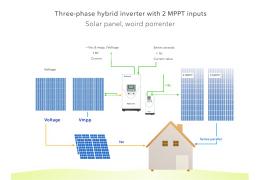
Each MPPT input independently optimises a group of panels. If all your panels are on the same roof section with the same orientation, 1 MPPT is enough. As soon as you have 2 different orientations (east/west, or south + façade), you need at least 2 MPPTs to avoid sacrificing production from one side. Most of our hybrid inverters offer 2 MPPTs — high-power models go up to 4 or even 6 MPPTs.
Battery compatibility
Not all hybrid inverters are compatible with all batteries. Two key parameters:
- Battery voltage: 48V for most residential inverters up to ~6 kVA, high voltage (100-200V+) for premium inverters like Huawei or Sofar HYD-EP ranges.
- BMS communication protocol: CAN bus or RS485. Without BMS communication, the inverter cannot intelligently manage the battery. Always check the certified compatible battery list for your model.
Brands available at Wattuneed
Sofar Solar
Our widest range with 28 references. Sofar offers single and three-phase hybrid inverters with an excellent balance of price, reliability and features. The ESI range (single-phase, 48V) is particularly suited to residential installations up to 6 kWp. The HYD-EP range scales up for more ambitious projects.
Deye
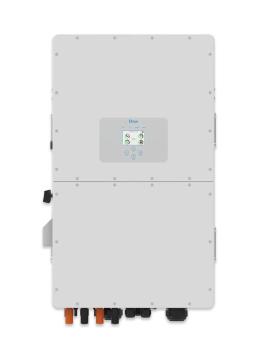
16 references available, from 3.6 kW single-phase to 30 kW three-phase. Deye has established itself as one of the best value-for-money alternatives on the market, with regular firmware updates and broad compatibility with lithium batteries. Some models are Synergrid-approved for Belgium.
Huawei SUN2000
The premium reference for monitoring and intelligent energy management. The Huawei ecosystem (inverter + LUNA2000 battery + FusionSolar) is one of the most complete on the market, but it operates as a closed system — you are tied to the Huawei battery.
WKS
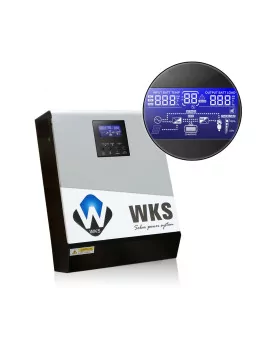
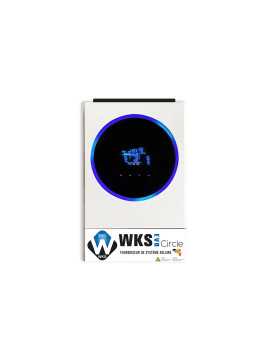
Our own brand, developed with our field experience. WKS EVO and EVO Circle Pro inverters are designed for demanding DIY installers: detailed documentation, French-speaking after-sales support, and proven robustness in off-grid and self-consumption applications.
Victron Energy
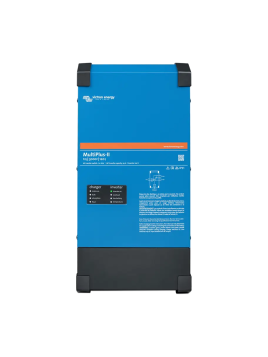
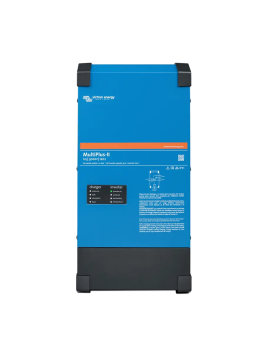
The undisputed reference for complex off-grid installations and professional monitoring. Victron inverters (Multiplus, Quattro) are programmable at an advanced level via the VenusOS/Cerbo ecosystem. Ideal for professional installers and demanding projects. Explore the full ecosystem in our solar kits category.