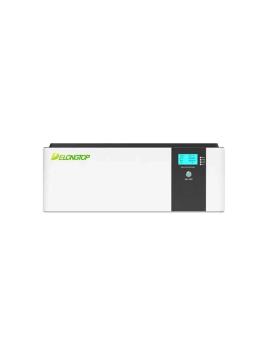
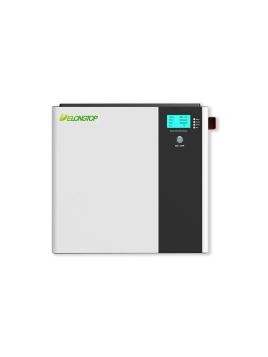
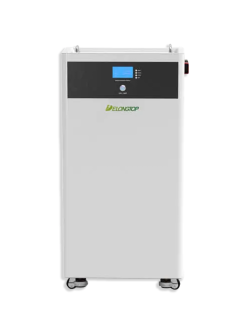
List of products by brand Delongtop
Delong - Specialized manufacturer of lithium batteries
Based in China, Delong has been manufacturing customized lithium batteries, including LiFePO4, ternary and semi-solid batteries, since 2011. With 13 years' experience, the company provides solutions for energy storage, power supply and portable stations. Its 6,000 m² factory is ISO certified, and its products meet CE, UL, KC, PSE, MSDS and UN38.3 standards. Delong combines quality, responsiveness and competitive pricing.
Expert supplier of customized lithium batteries
Since 2011, Delong has established itself as a recognized player in the manufacture of lithium batteries, with over 13 years' experience in the field. The company offers customized solutions for a variety of needs: ternary lithium-ion batteries, lithium iron phosphate (LiFePO4) batteries, energy storage systems, power batteries, portable energy stations and semi-solid models.
Located in China on a 6,000 m² site, the Delong factory complies with rigorous quality standards and holds the main international certifications: ISO, CE, UL, KC, PSE, MSDS, UN38.3. Thanks to controlled production and competitive prices, Delong is able to support its partners in the rapid deployment of their energy projects.
FAQ - Pylontech LiFePO4 batteries & solar storage
1. What is a Pylontech battery used for in a photovoltaic system? +
A Pylontech battery stores the solar energy produced during the day so you can use it later (evening/night), increase self-consumption and, depending on the system configuration, provide backup power.
2. What type of lithium battery is Pylontech? +
Pylontech offers LiFePO4 (lithium iron phosphate) batteries, a chemistry known for its stability and durability in energy storage applications.
3. How do I choose the battery capacity (kWh) for Pylontech? +
Capacity depends on your consumption, the loads you want to supply, the autonomy you need, and your solar production. In self-consumption, sizing often aims to cover evening/night usage; off-grid systems are sized for 24/48 hours (or more) depending on constraints.
4. Can I expand my storage by adding Pylontech modules? +
Yes. A key advantage is modularity: you can increase capacity by adding modules, within the manufacturer’s recommendations and the inverter/charger limitations.
5. Is Pylontech compatible with all inverters? +
Compatibility depends on the inverter/charger model and integration requirements: system voltage, communication protocol (CAN / RS485), parameters and commissioning procedure. Always check the compatibility list and recommended settings before installation.
6. CAN or RS485: which communication should I use? +
It depends on the inverter and the chosen wiring/architecture. Some systems prefer CAN for battery data exchange, others use RS485. Follow the compatibility recommendations and commissioning guide.
7. Are Pylontech batteries suitable for off-grid systems? +
Yes, they can be suitable for off-grid use if the overall system is designed for autonomy: PV sizing, battery capacity, inverter power, and a backup strategy (generator, etc.) if needed.
8. Which accessories are useful with Pylontech batteries? +
Depending on your configuration: interconnection cables, mounting racks/supports, communication components and, for some ranges, control modules. These accessories help with integration, cable safety and maintenance.
9. Where can I find a commissioning guide (e.g., US5000)? +
Check our technical resources and installation guides (depending on the model). For example, Wattuneed provides a dedicated guide for installing Pylontech US5000 batteries:
Pylontech US5000 installation guide.