Brand
Inverter type
Phase
Number of MPPT
Inverter power in VA
Price
UPS
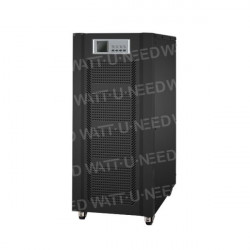
UPS (Uninterruptible Power Supply) devices protect your equipment against power cuts, power surges, undervoltage, voltage spikes and lightning strikes. In the event of a power cut, the UPS switches to a backup battery to keep your devices powered up and prevent data loss or damage to sensitive equipment.
There are two main types: online UPS units, which are connected in series and continuously regulate voltage, and line-interactive UPS units, which are connected in parallel and controlled by a microprocessor to monitor and correct voltage.
For solar requirements (DC/AC conversion and autonomous power supply), and for storage and backup mode, see the following links
Choose in 30 seconds
- Sensitive equipment (computers, networks, critical equipment): choose a suitable UPS with sufficient regulation and autonomy.
- Technology: online = continuous regulation; line-interactive = monitoring/correction via microprocessor.
- Autonomy: size according to the time required in the event of a power cut (minutes/hours) and the power of the devices.
- Solar requirements (230V autonomy from battery/panels): consider 230V converters or hybrids.
Sort by:








Related posts