Brand
Cells
Color
Max. power - Wp
Flexible solar panels
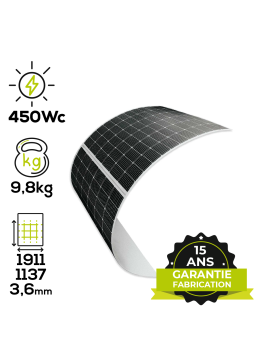
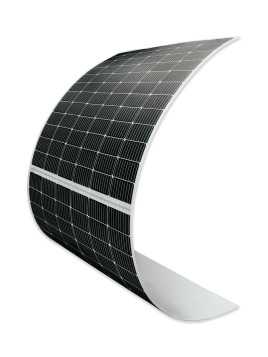
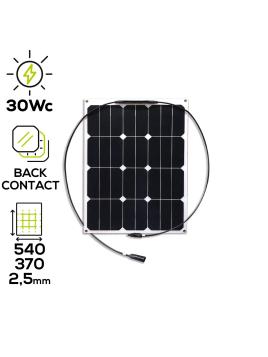
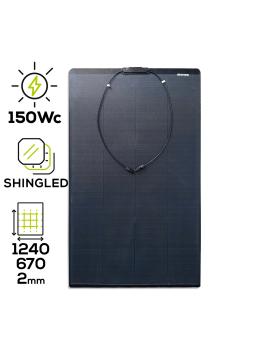
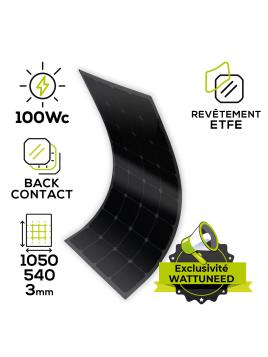
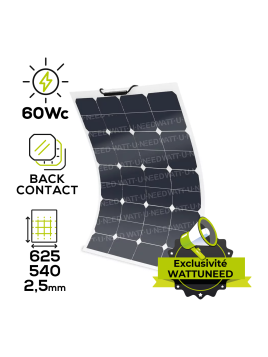
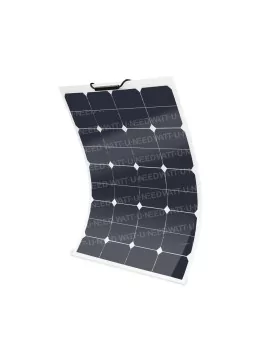
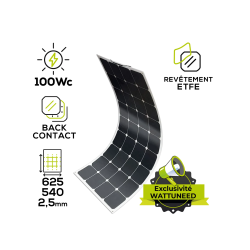
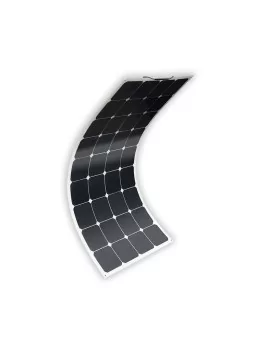
Thanks to their light weight and slim profile, flexible solar panels are ideal for mobile applications (boats, motorhomes, vehicles, shelters/holiday cottages). Their waterproof and compact junction box allows them to be glued or fixed to uneven surfaces. Cell encapsulation technology (e.g. ‘back contact’ silicon) offers high efficiency, quick installation and easy transport.
And if you’re looking for more “traditional” sizes and power ratings, take a look at our
Choose in 30 seconds
- Mobile use (boat / campervan): opt for a lightweight, flexible panel that’s easy to install.
- Installation on a curved surface: choose a flexible “adhesive/fixable” model.
- Battery charging: check that your system is correctly sized for battery charging (often 12V for portable use).
- Durability: look for a waterproof housing and a design suitable for outdoor use.















Related posts
Why choose flexible solar panels?
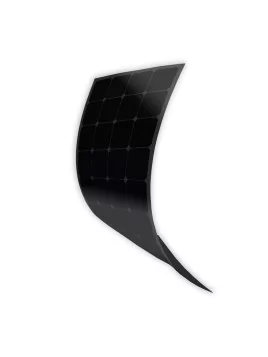
Flexible solar panels represent a revolution for mobile users. Unlike rigid panels with aluminum frames, these modules use high-quality polymers that allow them to adapt to the curvature of the surfaces. At Wattuneed, we recommend this solution for all configurations where weight and aerodynamics are critical.
The advantages of "Back Contact" technology
To ensure high efficiency despite a reduced surface area, our flexible panels often incorporate high-efficiency cells.
- Optimal yield: Since the electrical connections are located at the back of the cells (Back Contact), the surface area exposed to the sun is maximized.
- Absolute lightness: Weighing about 70% less than a conventional panel, they do not overload the roof of your motorhome or the deck of your boat.
- Thinness and aesthetics: With only a few millimeters of thickness, they integrate discreetly onto any surface.
Installation and mounting: advice from our experts
A successful installation guarantees the longevity of your panels. Contrary to popular belief, installing a flexible panel requires a few technical precautions.
Adhesive bonding or mechanical fixing?
On a vehicle roof or a boat deck, bonding with polymer sealant is the most common method. It ensures perfect sealing and resistance to high winds during travel. However, it is crucial to allow for slight air passage or choose a support that dissipates heat, as a solar panel loses efficiency when it overheats.
Maintenance and durability in marine environments
Our flexible panels are designed to withstand corrosive environments (salt, humidity). The waterproof junction box and MC4 connectors ensure loss-free energy transmission, even in the event of water splashes. We recommend regular cleaning with fresh water to remove salt deposits that could create shading and reduce production.
Typical applications: from Van-Life to boating
Wattuneed flexible panels meet various needs:
- Boating: Installation on the coachroof or on a bimini (via eyelets) to keep service batteries charged while at anchor.
- Motorhomes and Vans: Ideal for pop-up roofs that cannot support heavy loads.
- Portable charging stations: Used as backup solutions for recharging portable batteries during hiking or camping.
Sizing your mobile installation
A 100W flexible panel produces an average of 400Wh to 500Wh per day in summer. This is enough to power a small compressor refrigerator, LED lighting, and charge mobile devices. For total autonomy, pair your panels with an efficient MPPT controller, which will optimize your battery charge even in cloudy weather.